You’ve already decided that a basic vulnerability scan won’t cut it. Now you want a partner who can think like a real attacker, chain weaknesses together, and prove how far an intruder could actually go. That’s exactly what a full red team engagement delivers, and choosing the right provider matters more here than almost anywhere else in security.
Why? Because red team work stretches across your network, your applications, your cloud, and even your people. The skill of the operators, the breadth of the scope, and the quality of the final report all vary widely from one firm to the next. Pick well, and you walk away with a clear map of your real-world risk. Pick poorly, and you get a checklist that tells you almost nothing.
Below, you’ll find ten providers worth shortlisting in 2026. For each one, you’ll see what they focus on, how they run engagements, and the type of buyer they suit best.
How We Chose These Red Team Providers
Before you trust any list, you deserve to know how it came together. We didn’t rank these firms by ad budgets or name recognition. Instead, we measured each one against the things that actually matter when you hire a red team.
- Depth of red team work. We looked for true, objective-based adversary simulation across many attack paths, not a single application test wearing a new label.
- Operator expertise. Strong in-house talent and a recognized methodology, often aligned to the MITRE ATT&CK framework, carried real weight.
- Engagement flexibility. Some buyers want a one-time test; others want an always-on program. We favored firms that give you options.
- Reporting and remediation. A great test means little without findings you can act on, plus support to confirm your fixes work.
- Track record. Every firm here runs an established offensive security practice with a credible history.
- Range of fit. Together, these providers serve startups, mid-market teams, and large enterprises.
With those standards in mind, here’s how the ten providers stack up.
The 10 Best Red Team Penetration Testing Services in 2026
The firms below all earn their place, yet each one brings something different to the table. As you read, match their strengths against your own environment, budget, and goals.
Here’s a quick overview first.
| Provider | Base | Red team focus | Engagement model | Best fit for |
|---|---|---|---|---|
| CYBRI | United States | Manual-led red team plus BlueBox platform | Platform-supported, expert-delivered | Startups and mid-market |
| Bishop Fox | United States | Adversary emulation plus Cosmos | Point-in-time and continuous | Large enterprises |
| NetSPI | United States | Attack simulation plus platform testing | Platform-supported services | Enterprises consolidating vendors |
| SpecterOps | United States | Identity and attack-path simulation | Project-based | Identity-focused organizations |
| CovertSwarm | United Kingdom | Continuous red teaming | Subscription | Always-on programs |
| Lares Consulting | United States | Red and purple teaming | Project-based plus coaching | Collaborative defender teams |
| Praetorian | United States | Red team plus Chariot platform | Services plus continuous platform | Tech-forward enterprises |
| TrustedSec | United States | Research-led adversarial simulation | Project-based | Rigor-focused buyers |
| MDSec | United Kingdom | Elite objective-based red team | Project-based | Advanced-threat testing |
| Coalfire | United States | Threat-led testing plus compliance | Project-based | Regulated industries |
Now let’s dive into the details.
1. CYBRI
CYBRI pairs an expert offensive team with its own testing platform, which makes it a strong starting point when you want elite talent and a managed experience in one place. The firm runs manual-led engagements that mirror how real attackers behave, rather than leaning on automated scans alone.
Its BlueBox platform gives you a single hub to launch tests, review findings, and coordinate fixes directly with the people running the attack. You can also tap their broader offensive security services for compliance-driven work such as SOC 2 testing.
When you hire CYBRI’s red team, you work shoulder to shoulder with senior operators, including co-founder Paul Kubler, who leads offensive operations. CYBRI suits startups and mid-market companies that want serious capability without enterprise-only pricing.
2. Bishop Fox

Bishop Fox is a well-known offensive security firm that blends hands-on red team operations with continuous attack-surface monitoring through its Cosmos platform. The company emulates advanced adversaries, which helps larger organizations understand how a determined attacker might breach their defenses over time.
Its engagements suit enterprises that want both point-in-time depth and ongoing visibility into exposures as they appear.
Bishop Fox fits best when you operate at scale and need a partner comfortable with complex, sprawling environments.
3. NetSPI
NetSPI runs a large U.S.-based offensive security operation that combines platform-driven testing with dedicated red team engagements. The firm brings a broad catalog and the resources to handle big, multi-layered programs.
Its red team work centers on realistic attack simulation, while its platform helps you organize findings across many tests at once.
NetSPI fits best when you want to consolidate several offensive services under one experienced vendor.
4. SpecterOps
SpecterOps specializes in adversary simulation, with deep expertise in identity and attack-path security. The team also built the widely used BloodHound tooling, so their engagements focus on how an attacker moves toward high-value targets.
Because identity sits at the center of so many modern breaches, their work appeals to organizations worried about how privileges can be abused.
SpecterOps fits best when attack paths and identity security top your priority list.
5. CovertSwarm
CovertSwarm takes a continuous, subscription-based approach to red teaming, positioning itself as a constant source of simulated attacks rather than a one-off test. The UK-based firm probes your digital, human, and physical layers on an ongoing basis.
This model keeps steady pressure on your defenses, which can surface issues that a single annual test might miss.
CovertSwarm fits best when you want always-on adversary simulation built into your security routine.
6. Lares Consulting

Lares Consulting is a U.S.-based offensive security consultancy with a strong red and purple team practice. The firm pairs realistic attack simulation with hands-on coaching that helps your defenders improve as the engagement unfolds.
That collaborative style works well when you want your internal team to learn directly from experienced operators.
Lares fits best when you value close cooperation between attackers and defenders.
7. Praetorian
Praetorian blends red team services with its Chariot platform, which supports continuous offensive security and attack-surface management. The firm leans into engineering-heavy testing built for technology-driven organizations.
Its mix of expert services and platform tooling gives you both depth and ongoing coverage.
Praetorian fits best when you want a tech-forward partner that combines hands-on testing with a platform.
8. TrustedSec
TrustedSec is a research-led security consultancy with a respected red team and adversarial simulation practice. The firm draws on original research to mirror current attacker techniques.
Its emphasis on deep, methodical testing appeals to buyers who want thorough, well-documented engagements.
TrustedSec fits best when research-driven rigor sits high on your wish list.
9. MDSec
MDSec is a UK-based specialist with an elite red team known as ActiveBreach, along with a strong reputation for tooling and research. The firm runs objective-based engagements aligned to recognized attacker frameworks.
Its operators focus on realistic, high-skill simulations that test how your defenses hold up against advanced threats.
MDSec fits best when you want research-grade adversary simulation from a focused specialist.
10. Coalfire
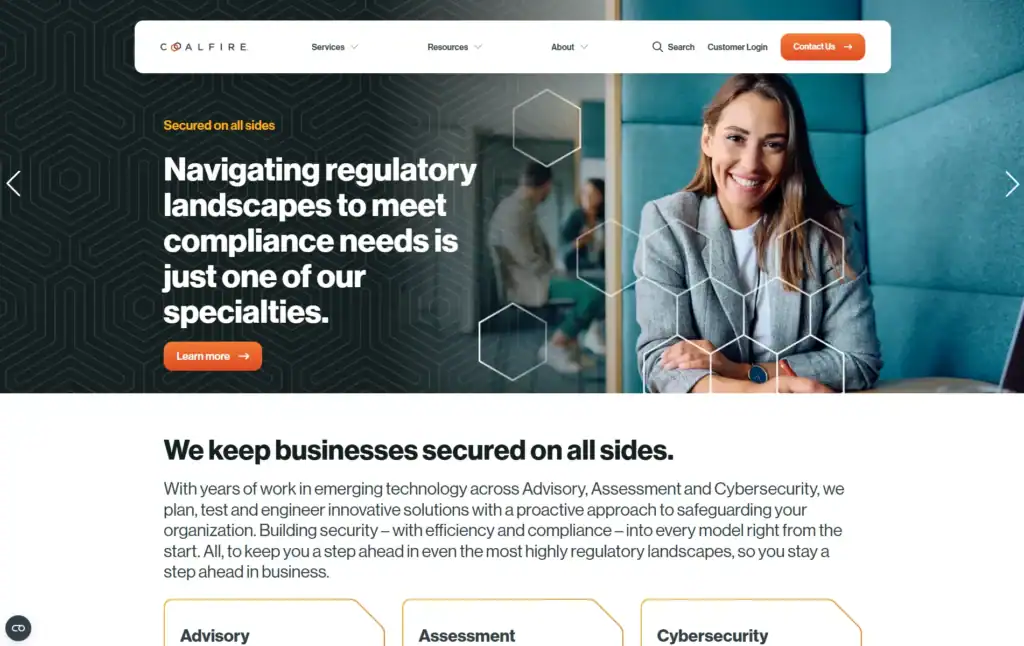
Coalfire is a cybersecurity advisory firm that offers threat-led penetration testing and red team services alongside a deep compliance and assessment practice. The firm supports demanding frameworks, including FedRAMP, which appeals to regulated organizations.
Its breadth lets you combine offensive testing with broader compliance needs under one roof.
Coalfire fits best when you operate in a heavily regulated industry and want both red team work and compliance support.
Each of these firms could anchor a strong security program, so weigh their strengths against your own situation before you commit. Next, let’s see how the ten compare side by side.
Choose Your Testing Approach and Team Model
Before you compare quotes, get clear on two choices that shape every red team engagement: how much information you hand the testers, and how the offensive and defensive sides work together. They sound similar, yet they answer different questions, and the right mix depends on how you view your own risk.
First, decide how much your testers should know going in. This knowledge level controls how closely the test mirrors a true outsider attack, and it ranges from a blind, outside-in attempt all the way to a fully informed white box testing review. Each option maps to one of the main testing types security teams rely on.
| Approach | What it means | Choose it when |
|---|---|---|
| Black box | Testers start with no inside knowledge and probe from the outside, like a real external attacker. | You want to see how you’d hold up against an outsider with no head start. |
| Gray box | Testers get limited information, such as a standard user login or a basic architecture overview. | You want a realistic blend of outsider and insider risk, often the best balance of depth and cost. |
| White box | Testers get full visibility, including credentials and sometimes source code. | You want the deepest, most thorough review of a specific system. |
Next, think about who takes part and how they interact. This choice decides whether your defenders learn during the test or only after it wraps up.
| Approach | What it means | Choose it when |
|---|---|---|
| Red team | An offensive team simulates a real attacker to test your defenses end to end. | You want to measure how well your people, processes, and technology detect and respond. |
| Blue team | Your internal defenders who monitor, detect, and respond. This is the side a red team tests against. | You’re building or assessing in-house defensive capability. |
| Purple team | Red and blue work together, sharing findings in real time so defenders improve mid-engagement. | Collaboration and fast learning matter more to you than a pure surprise test. |
Keep in mind that providers often combine these choices, running a gray box red team engagement as a purple team exercise, for example. So as you compare finalists, ask each one which blend fits your goals, then weigh the practical factors below.
How to Choose the Right Red Team Partner
To choose well, you need to match a provider’s strengths to your own goals, environment, and budget. Keep the following factors in mind as you compare offers.
Match the Engagement Model to Your Goal
First, decide whether you want a single, point-in-time test or an ongoing program. A one-time engagement gives you a clear snapshot before an audit or product launch, while continuous penetration testing keeps pressure on your defenses year-round. If you expect frequent changes to your systems, an always-on model, often delivered as penetration testing as a service, usually pays off over time.
Check the Scope and Tactics
Next, confirm what the engagement actually covers. A genuine red team reaches across your network, applications, cloud, and people. Ask whether the firm includes social engineering, since attackers love to target employees, and whether it tests how an intruder performs reconnaissance before striking. You’ll also want to know how operators handle pivoting once they gain a foothold, because lateral movement reveals how far a breach could spread.
Weigh the Reporting and Retesting
A red team engagement earns its value in the report. Look for findings written in plain language, ranked by risk, and paired with clear remediation steps. Reviewing a provider’s sample report ahead of time tells you a lot about what you’ll receive. Just as important, confirm that the firm retests after you apply fixes, so you can prove the gaps are closed.
Factor in Compliance and Cost
Finally, line the engagement up with your compliance needs and your budget. If you answer to frameworks like SOC 2, ISO 27001, or FedRAMP, choose a partner who knows them well. Cost matters too, so understanding what these engagements cost helps you compare quotes fairly.
Work through these factors, and your shortlist will quickly narrow to the firm that fits your situation best.
Red Team Engagements vs. Standard Pen Tests vs. PTaaS
Since you’re comparing vendors, it helps to keep three related terms straight, because providers use them in different ways.
A standard penetration test usually targets a defined system and answers a narrow question: which vulnerabilities exist here? A red team engagement goes further. It sets a real-world objective, such as reaching your customer database, then tests every path an attacker might take, including your people. That broader lens is what makes it so useful for measuring your true adversary exposure.
PTaaS, meanwhile, bundles testing into a platform-driven service, often with continuous coverage and easier tracking. Many buyers blend these approaches.
With those distinctions clear, you can read every provider’s pitch with a sharper eye.
Find the Right Red Team Partner
Choosing a red team provider comes down to fit. Every firm on this list brings real strength, yet the best choice depends on your size, your industry, and the goals you set for the engagement.
Start by matching your priorities to the profiles above, lean on the comparison table to narrow the field, and ask each finalist about scope, reporting, and retesting. Do that, and you’ll hire with confidence rather than guesswork.
When you’re ready to take the next step, you can book a demo to see how a modern engagement works, or simply reach out to the team to talk through your goals. Whichever partner you choose, a well-run red team engagement will show you exactly where you stand, and exactly what to fix next.