Compare the top 5 US-based penetration testing companies—Cybri, Synack, NetSPI, HackerOne, and Rapid7—trusted by SaaS and regulated firms for security and compliance. Learn why US location matters for legal protection, faster support, and data privacy. Use this guide to quickly find the right partner for your business.
In a world full of online risk, firms that care about safety have to continuously test their systems. Many use ongoing PTaaS services and tools, often combining deep manual checks by red teams, to spot critical weak spots before potential attackers are able to use them. Beyond that, organizations needing to stay compliant will often pick a U.S. provider as they are well-versed in standards like SOC 2, HIPAA, or FedRAMP [1].
Partners from the U.S. offer additional advantages in terms of real-time collaboration in the same time zones for faster addressing of high-risk scenarios. They also keep sensitive data on U.S. soil, which simplifies legal and NDA issues [2]. This guide will profile five top U.S.-based penetration testing companies and what they excel at. Use these insights to compare vendors before engaging their sales teams, so you can find the partner that best fits your needs.
Top US-Based Partners
Choosing between different providers can be a daunting task for any decision maker. However, it is an important step to ensure you meet both the technical and compliance requirements. These vendors were selected based on their scalability, security posture, and compliance capabilities relevant to various industries.
1. Cybri
Best for: SaaS companies and software teams (web/mobile apps) seeking high-touch pentesting with U.S. compliance expertise.
Cybri is a New York City-based penetration testing company specializing in expert-led testing for web applications, mobile apps, APIs, networks, and cloud assets. The firm has quickly built a reputation for thorough manual testing combined with a modern delivery platform. Unlike volume-driven or crowdsourced models, Cybri’s US-based team consists of vetted ethical hackers, many of which are U.S. military veterans or ex-government specialists, with top certifications like OSCP, CISSP, and GIAC [3].
Cybri operates a PTaaS model powered by its proprietary Blue Box platform. This SaaS portal gives clients real-time visibility into the test progress, collaboration with the testers, and on-demand retesting. As vulnerabilities are discovered, they are logged in the dashboard with clear risk ratings and remediation steps, enabling agile fix/verify cycles.
As a US firm, Cybri is well-versed in domestic compliance standards. They offer specialized pentests to help customers meet SOC 2, HIPAA, PCI-DSS and other regulatory requirements. This makes Cybri a strong choice for fintech, healthtech, SaaS and other companies in regulated industries that must undergo rigorous audits or protect sensitive data.
2. Synack
Best for: Large enterprises and public sector organizations needing continuous, on-demand testing across complex applications.
Founded in 2013 by former U.S. Department of Defense analysts, Synack operates out of Redwood City, CA, and blends a crowdsourced hacker community with a PTaaS platform. This results in a scalable solution for continuous security testing, as Synack’s platform enables on-demand pentesting of assets ranging from web and mobile applications to APIs and cloud infrastructure.
Synack delivers their PTaaS services through a subscription model where customers get access to the Synack Portal where they can launch tests within days and receive results in real time [4]. These tests are executed by pre-screened experts who are rewarded for finding impactful vulnerabilities.
Synack’s approach is appealing to organizations in financial services, government, and technology sectors that require thorough testing with legal protections. They take on full liability and NDA responsibilities during testing. Their subscription model includes real-time results and AI-assisted recon, though findings depend on researcher availability and motivation, which can vary compared to dedicated in-house teams.
3. NetSPI
Best for: Enterprises in highly regulated industries that need deep expertise and a customizable testing program.
NetSPI is a US offensive security company based in Minneapolis, MN, where they serve clients that include some of the world’s top banks, healthcare organizations, and Fortune 500 companies. They offer a range of different niche services, from network and application pentesting, to cloud configuration assessments, mainframe testing and red team exercises. This breadth makes NetSPI a one-stop shop for large firms with diverse environments.
NetSPI delivers assessments through a hybrid model combining traditional consulting and PTaaS. Engagements are tailored to a client’s scope and risk profile, while NetSPI also provides a platform for managing findings, tracking remediation. Their hybrid PTaaS and consulting model suits complex environments, though engagements can lean toward higher-cost, project-based work.
4. HackerOne
Best for: Organizations with customer-facing web applications or products that want a crowdsourced bug bounty approach to find a wide range of vulnerabilities quickly.
HackerOne is a security company based in San Francisco, CA, known for its public bug bounty programs. The firm also offers structured penetration testing services via its network of over 1 million registered ethical hackers globally. The company connects clients with a community of researchers to surface security flaws that traditional methods often overlook through a crowdsourced model.
HackerOne’s primary PTaaS model is crowdsourced bounty-based testing. Clients define the scope and offer rewards for valid vulnerabilities, while HackerOne invites its vetted community of top hackers to test within that scope for a fixed period, delivering a formal report at the end.
HackerOne is often chosen by tech companies, SaaS providers, and even government agencies that want the breadth of a crowd but with oversight. It is especially useful for finding business logic flaws or edge-case issues that a small team might miss, but its bounty-driven model lacks the structured compliance focus of dedicated pentest firms.
5. Rapid7
Best for: Companies seeking a full-service security partner, those who want penetration testing tightly integrated with vulnerability management and incident response programs.
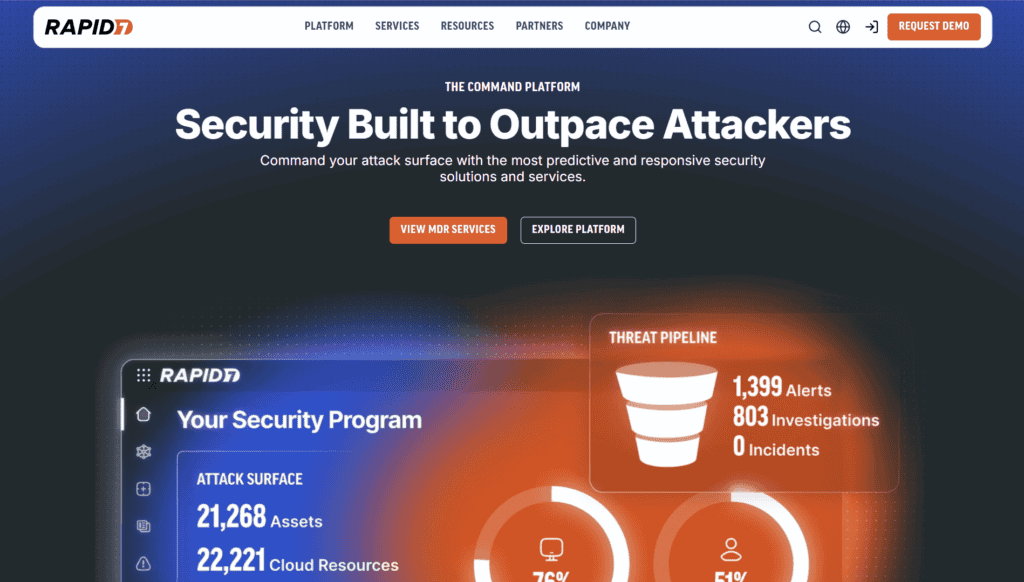
Rapid7 is a Boston-based cybersecurity firm known for penetration testing and their consulting services. In the pentest arena, Rapid7 offers manual testing augmented by automation to simulate real-world attacks on networks, applications, cloud services, IoT devices, and even employee security via social engineering. With roots dating back to 2000, Rapid7 has a long-standing reputation and is publicly traded.
Penetration testing is usually offered by the company as a project-based service, with pricing and scope variations based on the environment. Rapid7’s uses their cloud-based Insight platform to deliver findings, which enables clients to track vulnerabilities in addition to their standard vulnerability management workflow. Larger enterprise organizations that already use Rapid7’s scanners or SIEM will find this integration appealing, but startups and smaller businesses may find it intimidating.
A Quick Comparison
For a side-by-side look at these U.S.-based vendors, here is a comparison of key aspects:
Company | Headquarters | Model | Pricing | Best For |
Cybri | New York CIty, NY | Manual red-team, PTaaS | Scope-based | Web Apps, Mobile Apps, SaaS |
Synack | Redwood City, CA | PTaaS + crowdsourced | Subscription | Enterprises |
NetSPI | Minneapolis, MN | Manual + PTaaS | Scope-based | Regulated Industries |
HackerOne | San Francisco, CA | Crowdsourced bounty | Per-vulnerability | Web Apps |
Rapid7 | Boston, MA | Manual + automated | Custom | Vulnerability Management Seekers |
(Pricing models: “Fixed-price” indicates set package rates; “Scope-based” means pricing varies by project size/complexity; “Per vulnerability” indicates bounty payments per finding.)
Choosing the Right Partner
When choosing a U.S.-based penetration testing vendor, one advantage is the possibility of real-time collaboration and support. This means you spend less time waiting for time zones to match before addressing critical issues. Local U.S. providers also simplify legal processes like contracts, NDAs, and recourse under U.S. law.
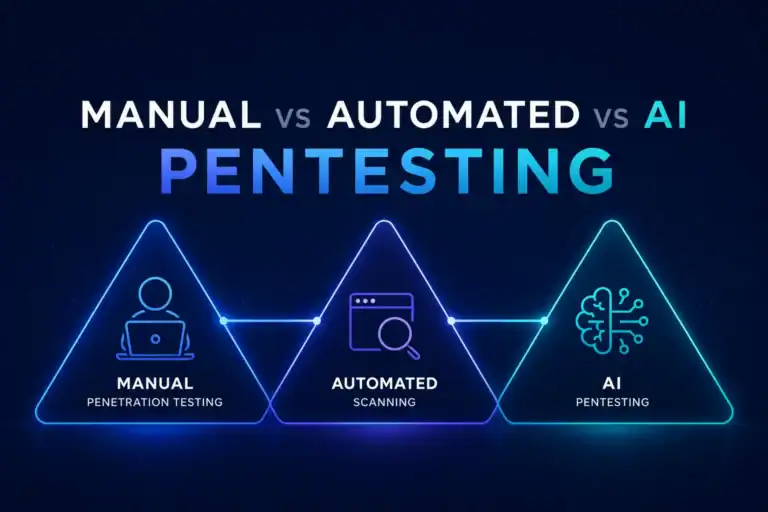
Another aspect to consider is whether to go for a manual or crowdsourced testing model. So, determine if you prefer a traditional consulting approach with a dedicated team doing a deep manual pentest, or a crowdsourced model with many testers finding bugs in parallel.
The pricing model is another consideration that can have a measurable impact, with penetration testing pricing varying from flat-fee packaged engagements, to hourly charges or performance-based bounties. Some customers appreciate knowing what they are going to pay with fixed or subscription pricing. On the other hand, per-vulnerability payments might incentivize more findings, but carry less predictability for total costs.
If you work in a regulated field, seek firms that have relevant certifications or experience, such as FedRAMP, SOC 2 [5], or PCI QSA. They will understand the reporting and rigor you need. In the same vein, consider the testers themselves, as a highly certified team with credentials such as OSCP, CEH or CISSP often correlates with higher quality work.
Delivery, reporting & retesting is our final recommended point to consider. For instance, does the firm provide an online dashboard for tracking issues? Do you need the delivery to map findings to a framework like OWASP Top 10? You might also want to look closer at firms including retesting and support after their initial findings for a more efficient process.
Final Thoughts
Investing in penetration testing is an investment in your company’s resilience. After all, neglecting thorough penetration testing can have severe consequences, as seen in cases where SaaS providers suffered large-scale breaches affecting multiple customers [6].
All the providers mentioned here are based in the U.S. They offer local knowledge, legal reassurance, and skilled talent. U.S. penetration testing companies often fit American businesses better because they provide stronger compliance support and real-time assistance. They also give the assurance that comes from working with locally vetted security professionals.
In the end, the best partner depends on your organization’s goals. If you want a clear, fixed-price agreement with a U.S.-only team, Cybri is a great option. This is especially true for SaaS and tech companies that need quick onboarding, detailed results, and ongoing retesting capabilities.
References
- FedRAMP. (n.d.). FedRAMP 20x Standards and Docs
- Office of Public Affairs. (n.d.). Justice Department Implements Critical National Security Program to Protect Americans’ Sensitive Data from Foreign Adversaries
- Cybri. (n.d.). New York Penetration Testing Services
- Synack. (n.d.). The Synack Cybersecurity Testing Platform | Synack
- System and Organization Controls. (n.d.). What is SOC 2?
- Between Two Firewalls. (2024). Are You Prepared For When Your SaaS’s Environment Is Hacked?