Looking for the best web application penetration testing companies in 2025? This guide spotlights 10 top-tier providers specializing in web app pentesting—prioritizing deep manual testing, CI/CD-aligned PTaaS delivery, and audit-ready reporting. From elite firms like Cybri, known for expert-led SaaS testing and real-time remediation support, to automation-first players like Acunetix and Invicti, this list covers a spectrum of needs for modern engineering, security, and compliance teams. Learn how each vendor supports fast-moving, cloud-native environments—and why traditional pentesting no longer cuts it. |
In 2025, web application penetration testing is essential as cloud-native SaaS platforms become prime targets due to their handling of sensitive customer data. “The global penetration testing market is valued at USD 2.74 billion in 2025 and projected to reach USD 6.25 billion by 2033, with a CAGR of ~12.5%“ [1]. Specifically, “the web application segment—driven by DevSecOps, API-first design, and serverless deployments—stood at USD 1.7 billion in 2024 and is forecast to hit USD 2.2 billion in 2025“ [2].
Key trends shaping modern web app pentesting include continuous Penetration Testing as a Service (PTaaS) aligned with CI/CD workflows, which is replacing outdated point-in-time testing. AI and ML are also transforming the landscape—”LLM-based tools like PentestGPT and RapidPen are automating early-stage tasks, allowing human testers to focus on logic and business risk“ [3]. Finally, as more apps shift to cloud-native, API-first, and microservice-based architectures, testing must adapt—covering SPAs, GraphQL endpoints, and containerized workloads with precision.
The companies featured in this guide were selected based on their proven specialization in web application penetration testing. We prioritized vendors that offer deep manual testing, CI/CD-friendly delivery, and audit-ready reporting for SaaS, fintech, and healthtech platforms. Key criteria included:
- Experience with modern tech stacks
- Ability to align testing with compliance frameworks
- Support for continuous testing models (PTaaS), not just one-time scans
Quality of reporting, client trust, and security team reputation
Best Web Application Pentesting Companies
1. Cybri
Best for: SaaS and fintech teams seeking rapid, audit-aligned, expert-led web app pentesting with real-time remediation tracking.
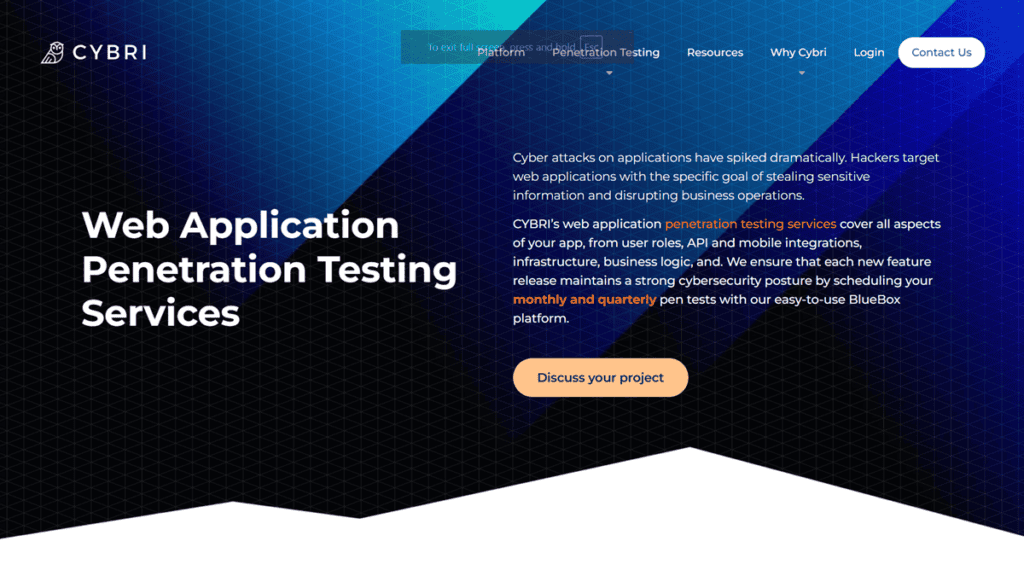
Cybri provides web application testing tailored to fast-moving SaaS teams building with modern stacks, microservices, and CI/CD workflows. The team focuses on complex front-end and back-end applications—testing SPAs, APIs, and cloud-hosted microservices—while aligning every test with security and compliance goals. Their U.S.-based testers hold certifications like OSCP and OSWE, ensuring all engagements are expert-led and tailored to real-world threats.
Key services
- OWASP Top 10 testing (authenticated/unauthenticated)
- GraphQL and REST API assessments
- Business logic testing across user roles
- Cloud-native web app coverage (AWS, Azure, GCP)
- Secure code review, threat modeling, and ongoing PTaaS retesting aligned with dev cycles.
Areas of specialization
- React/Node.js stacks, containerized SaaS environments
- SOC 2, HIPAA, PCI audit readiness
- HealthTech, InsurTech, and FinTech platforms
- Role-based access and privilege escalation testing
- CI/CD-integrated security validation
Strengths
- BlueBox PTaaS platform with live triage, comments, and tracking
- Remediation-ready reports with PoC, CVSS, and compliance mapping
- Seamless integration into ticketing systems and agile workflows
- Direct access to senior pentesters throughout the engagement
- Real-time collaboration and audit-ready documentation
Client reviews
- “CYBRI is a great solution that helps streamline the penetration testing process. I strongly recommend them and will work with them again” – Marco Huslmann, CTO MyPostcard
- “I’m using CYBRI and have been very impressed with the experience and quality of the experts and CYBRI’s customer service. It has been a super seamless process that I’m happy and pleased with – I recommend CYBRI to all businesses” – Sergio Vela, CTO at HealthCare.com
2. Acunetix
Best for: Teams looking for fast, automated vulnerability scanning with CI/CD integrations.
Acunetix, now part of the Invicti family, is a well-known automated web vulnerability scanner designed to quickly detect common and critical flaws like SQLi, XSS, and misconfigurations in modern web applications. It’s especially strong in scanning complex SPAs, CMS platforms, and JavaScript-heavy environments.
Key services
- Automated DAST scanning
- CI/CD integration support
- OWASP Top 10 vulnerability detection
- Targeted scans for WordPress, Joomla, and Drupal-based applications
Areas of specialization
- High-speed automated scanning for dynamic websites
- Coverage of APIs and HTML5/JS frontends
Strengths
- Scans over 7,000 known vulnerabilities
- Well-suited for DevSecOps teams seeking shift-left security
Client Reviews
“Acunetix is our vulnerability scanning tool of choice for situations where information security is a real concern and confidence in safety is key.” – JP Lessard, President of Software Services, Miles Technologies.
3. Invicti
Best for: Large organizations needing scalable, enterprise-grade AppSec scanning with proof-based results.
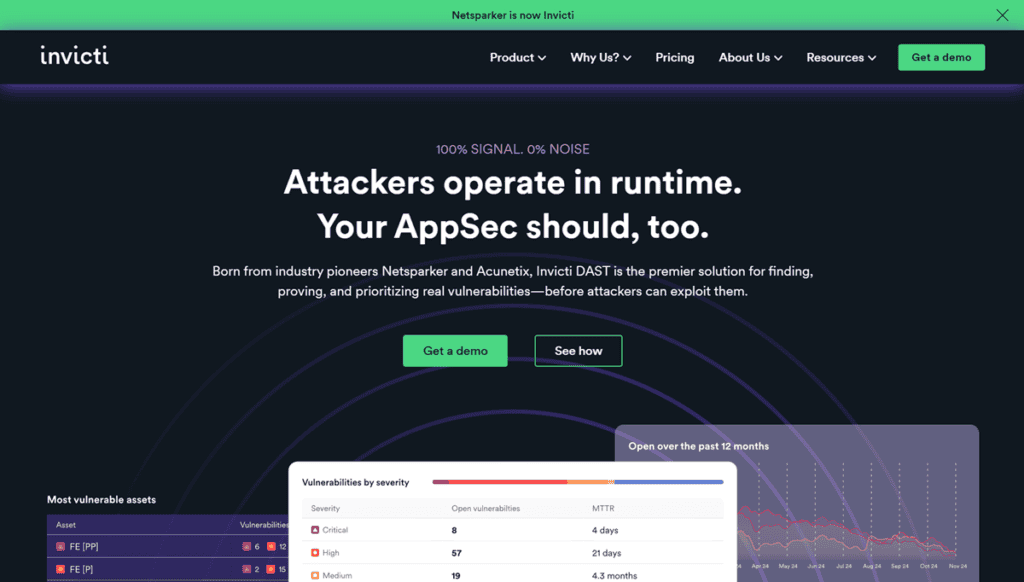
Invicti is an enterprise-focused web vulnerability scanning platform offering automated DAST/IAST testing with high accuracy. It provides proof-of-exploit validation and supports large-scale asset management for continuous testing across distributed teams.
Key services
- DAST and IAST scanning for web applications and APIs
- Proof-based vulnerability validation to reduce false positives
- Integration with issue trackers like Jira, Azure DevOps
Areas of specialization
- Large-scale scanning deployments
- Enterprise security operations with CI/CD pipeline integration
Strengths
- Supports SSO and role-based access control
- Comprehensive vulnerability tracking and dashboarding
- Ideal for scaling security testing across teams and geographies
Client Reviews
“The tool is user-friendly and easy to set up. It is very accurate when it comes to discovering vulnerabilities. The support team is very professional and replies quickly.” — Sofia V., IT Security Architect and Analyst, SIG Group
4. Offensive Security
Best for: High-assurance, manual penetration testing engagements performed by elite experts.
Known for Kali Linux and their industry-respected certifications (OSCP, OSWE), Offensive Security (OffSec) offers bespoke penetration testing engagements for critical web applications. Tests are conducted by the same elite professionals who created industry-standard certifications like OSCP and OSWE.
Key services:
- Manual web application penetration testing
- Custom exploit development and adversary simulation
- OSWE-grade web logic testing
- Internal and external infrastructure assessments
Areas of specialization:
- High-risk environments needing deep manual analysis
- Security-critical platforms (finance, infrastructure, healthcare)
Strengths:
- Hands-on testing by certified professionals only
- Deep technical insight into logic flaws and exploitation paths
- Trusted by defense, banking, and critical infrastructure sectors
Client reviews:
“Their technical team and top-level management are awesome and understand the ongoing development process.” — Yagnesh P., Ethical Hacker / Red Teamer
5. Synack
Best for: Enterprise teams needing continuous pentesting via a vetted global researcher network.
Synack combines vetted crowdsourced researchers with its secure platform to deliver scalable, continuous pentesting. Synack blends AI and a 1,500+ researcher network to deliver continuous web app assessments.
Key services
- Web and API penetration testing
- Vulnerability discovery and validation
- Executive-level dashboards and analytics
Areas of specialization
- Large-scale, global security programs
- Government-grade testing and FedRAMP readiness
Strengths
- Speed and flexibility of a crowdsourced model
- Predictable SLA-backed delivery
- Secure environment for researcher access and testing collaboration
Client reviews
“At least 35 highly qualified penetration testers will attack your site … If you haven’t tried Synack, then you haven’t experienced the true power of crowdsourced pen testing.” — AC, Verified User in Computer Software (g2.com)
6. HackerOne
Best for: Organizations looking to combine bug bounty insights with flexible pentesting.
HackerOne offers PTaaS delivered by vetted researchers alongside its well-known bug bounty programs. Its platform enables fast launches, remediation support, and continuous testing oversight.
Key services:
- Web application and API pentesting
- Vulnerability disclosure programs (VDP)
- Hybrid bug bounty and pentest engagements
- SDLC integration and analytics
Areas of specialization
- Developer-centric organizations
- Integration of crowd-powered testing with SDLC tools
Strengths
- Launches in days, not weeks
- Streamlined retesting and ticketing via platform
Client reviews
“Good for cyber security, Easy to use, trustworthy and efficient Provides multiple channels to categorize a threat so that it can be reported efficiently Gives an easy way to track threats” – Peter A., Copywriter at Pablito Greco Ltd
7. Bishop Fox
Best for: Deep manual assessments of complex, business-critical web apps.
Bishop Fox is a top-tier offensive security firm known for delivering rigorous, logic-focused application assessments. Their services span pentesting to red teaming, supported by the Cosmos platform for issue tracking.
Key services
- Application penetration testing (web, mobile, APIs)
- Hybrid code-assisted testing
- Continuous security monitoring (via Cosmos)
Areas of specialization
- Business logic flaws and advanced threat emulation
- SaaS and fintech platforms with complex role-based apps
Strengths
- Highly customized testing engagements
- Deep technical talent and strong reporting
- Real-world attacker mindset embedded in every assessment
Client reviews
- “I wanted to choose a company with deep technical skills… that clearly excelled at offensive security.” — Victor Vuillard, CSO/CTO at Parrot
8. Blaze Info Sec
Best for: Agile startups and mid-sized companies needing hands-on manual testing with audit-ready reporting.

Blaze InfoSec is a CREST-accredited security firm offering deep manual testing, especially for fast-growing SaaS, fintech, and healthtech companies. They deliver traditional pentests and PTaaS via their VulnKeep platform.
Key services
- Web, API, and mobile application testing
- Red teaming and cloud assessments
- Compliance-aligned security testing (SOC 2, ISO 27001, HIPAA)
Areas of specialization:
- Manual-heavy testing for cloud-native applications
- Security testing as part of audit preparation
Strengths:
- Transparent and technically detailed reporting
- Engagements structured to align with agile DevOps release cycles
- Global delivery team with strong European presence
Client reviews:
“Blaze Information Security maintains comprehensive industry knowledge and executes high-caliber work. … Their competitive prices set them apart.” – Bikramaditya Guha, Application Security Lead, Clutch.
9. Cure53
Best for: Deep-dive white-box assessments for privacy-critical, open-source, and crypto-focused platforms.
Cure53 is a boutique German security consultancy known for its rigorous manual reviews and secure code audits. They’re a top choice for browser security, open-source maintainers, and privacy-centric app developers.
Key services
- White-box web and mobile app testing
- Secure code reviews and cryptographic audits
- Architectural threat modeling and risk analysis
Areas of specialization
- Privacy tech (VPNs, messaging apps)
- Web frameworks and decentralized apps
Strengths
- Reputation for technical thoroughness
- High-trust relationships with developer teams
- Published audit reports for transparency
Client reviews
“We would like to thank the Cure53 team for their expertise and dedication throughout this audit process. We also appreciate the collaboration and professionalism demonstrated during both the planning and execution stages of the audit.” – Nym response to Cure53 Security Audit.
10. Praetorian
Best for: Enterprises seeking continuous testing, breach simulation, and strategic pentesting at scale.

Praetorian is a U.S.-based offensive security consultancy offering penetration testing and red teaming supported by their Chariot platform. They simulate real-world threats to uncover business risks and drive remediation.
Key services:
- Web app pentesting and adversary emulation
- Breach & attack simulation (BAS)
- Continuous red teaming via Chariot
- Attack path visualization and threat modeling
Areas of specialization
- Critical infrastructure, defense, and regulated industries
- Hybrid assessments with strong engineering integration
Strengths
- Deep visibility into attacker TTPs
- Strategic reporting that maps findings to business impact
- Trusted by Fortune 500 clients like Samsung and Priceline
Client Reviews
“Praetorian always considers the broader set of enterprise services we have here at Qualcomm so reports and recommendations can be actionable.” – Gabe LawrenceSenior IT Security Engineer at Qualcomm.
Why Choose PTaaS & Modern Web App Pentesting
Traditional pentests offer limited value in fast-paced SaaS environments—they’re slow, static, and often outdated by the time results are delivered. Modern PTaaS addresses this by integrating directly into CI/CD pipelines, enabling real-time triage, automated retesting, and faster collaboration between security and development teams.
Embedding PTaaS into CI/CD pipelines accelerates remediation and strengthens real-time application security.—”studies show that integrating continuous testing tools into CI/CD can reduce vulnerability exposure time and elevate deployment performance across all DORA metrics”[4]. This matters especially as web app attacks become more frequent: “web application-related incidents account for roughly 26% of all breaches, making them the second most common attack vector”[5].
How to Choose the Right Provider
Not all PTaaS vendors are built the same. To choose the right one, consider these criteria:
Certifications & Expertise | Look for OSCP, OSWE, CREST or equivalent. Manual testing depth matters. |
Automation + Human Testing | Automation helps scale—but must be paired with logic-based, human-led analysis. |
Scope Alignment | Ensure they cover modern stacks—React, GraphQL, Node.js, AWS, etc. |
Reporting Quality | Auditor-friendly, remediation-focused reports with CVSS ratings and clear reproduction steps. |
Platform UX | Is it intuitive for developers? Can you track issues live and collaborate easily? |
Engagement Flexibility | Do they support retests, monthly cycles, or on-demand launches? |
Finally, match the vendor to your maturity—startups need guidance; larger orgs prioritize scale and SLAs.
Final Thoughts
Web applications are a top attack vector—and as modern platforms grow in complexity, so do the risks. Traditional pentesting methods can’t keep pace with evolving architectures like SPAs, GraphQL APIs, serverless functions, and containerized deployments. That’s why organizations are moving toward continuous, transparent testing models that better align with agile development.
Cybri stands out for its ability to combine expert-led, manual testing with the scalability of PTaaS delivery. Cybri tests real-world attack paths and delivers actionable results via a platform built for devs, security teams, and auditors.
For audit-ready testing built to match the speed and complexity of modern web apps, Cybri offers expert-led PTaaS tailored to your environment and delivery cycles.
References
- Straits Research. (2024). Penetration Testing Market Size, Share, Growth & Forecast 2024–2033
- Global Growth Insights. (2025). Web Application Penetration Testing Market Report 2025–2030
- Liu, J., Zhu, Y., & Wang, Z. (2023). PentestGPT: An Automated Penetration Testing Agent for LLMs. arXiv preprint arXiv:2308.06782.
- Continuous Delivery Foundation. (2024). The State of CI/CD Report.
- Verizon. (2025). 2025 Data Breach Investigations Report.
Frequently Asked Questions
It’s a security assessment that simulates real-world attacks on your web app to identify vulnerabilities like broken authentication, injection flaws, and logic issues before attackers do.
A detailed report with vulnerability descriptions, risk ratings (e.g., CVSS), proof of exploitation, remediation guidance, and an executive summary suitable for compliance teams.
At least annually or after any major code or infrastructure changes. Continuous testing is recommended for agile or regulated environments.
Pricing typically ranges from $5K–$25K+, based on app complexity and test scope.
Standard tests take 1–2 weeks, but more complex apps or compliance-aligned assessments may take longer, especially if retesting is included.