If you’re looking for an offensive security provider, you might get caught chasing after who only covers part of what you really need.
Oftentimes, penetration testing takes up most of the conversation when we talk about offensive security. That leaves quite a bit off the table for buyers, as a mature offensive security engagement program reaches well beyond a scoped test of a single application.
It also covers red teaming, adversary emulation, social engineering, external attack surface work, and testing that runs continuously instead of once a year.
Picture a spectrum.
On one end there’s, focused, technical assessments e.g., a web app pentest, an API review, a cloud configuration audit.
Move along and you reach red team operations, where testers chase a goal such as reaching customer data and see how far they get before anyone notices.
Push further and you find adversary exposure assessments and adversary emulation, which copy the tactics of specific threat groups so you can measure how your controls hold up against a known playbook.
Next, social engineering campaigns test whether your staff click the link or hand over the badge, since attackers rarely bother with a zero-day when a convincing email does the job. Purple teaming pairs your defenders with the offensive team in real time, turning each finding into a detection rule instead of a line buried in a report.
Then comes the machinery that keeps offense running between big engagements. Dynamic application security testing and external attack surface monitoring flag new exposures as they appear, so a fresh subdomain or a forgotten port doesn’t sit open for months.
Finally, a newer discipline is growing fast as well: testing AI and language models for prompt injection, data leakage, and the odd ways these systems can be tricked.
In this guide, we go beyond the pentest and provide you with a real list of offensive partners and help you evaluate who’s the best fit for your firm.
Let’s get into it.
How to evaluate an offensive security provider
Before we get into depth, we’ll take you through how to scope each provider and create a shortlist of a few to reach out to.
Human depth versus automated speed
Do you require human expertise or will an automated scan have you covered? That’s the first factor you should start shortlisting against.
Why? Automated scanners can’t reason over your business logic the way a human tester is able to. Strong offensive security providers will have a team of human testers who’ll use automated tools to extend their reach, but not replace their expertise.
Scanners excel at catching known issues across a wide surface, but they rely on predefined patterns and signatures, and quite simply can’t match the creativity of real life hackers trying to break into your system. That’s where human testing comes in.
So, make sure to ask each vendor how they manual and automated work. That’s your startpoint.
Point-in-time or continuous
An annual test gives you a snapshot of your code and infrastructure, and is generally required to fulfill compliance requirements like those of SOC II.
Today though, your attackers all change faster than that, and for that reason many buyers now prefer a continuous testing model or a platform that surfaces findings as they happen. That way, remediation starts in days instead of quarters.
The route you go all depends on your context, though.
If you’re a small team with a stable product then you might do just fine with scheduled tests that occur quarterly. On the other hand, a fast-shipping SaaS company usually needs something ongoing.
Scope, methodology, and proof
If most of your risk lives in the cloud, a provider with deep cloud research beats a generalist every time. That counts for any other type of testing as well.
In addition to specific assets, look for recognized methodology too. A provider who employs a repeatable process signals rigor. Look for frameworks like PTES, OSSTMM, OWASP, and MITRE ATT&CK, as these show a vendor works to a standard instead of improvising.
For regulated work, ask about threat-led testing schemes such as TIBER-EU and the requirements under DORA. Finally, certifications like OSCP and CREST are signals for serious providers so ask about these when you hop on a call as well.
Reporting, remediation, and price
It’s time to talk deliverables and price.
The best vendors will provide your team with findings that your developers can actually act on. Their report should clearly detail the severity of any findings, reproduction steps and remediation guide.
Someone who delivers their findings in real time (via a PTaaS platform for example) allows your engineering team to work on fixes as issues are found instead of waiting for a report.
Retesting has become an industry standard, and providers who don’t offer it have fallen behind.
When it comes to price, you can learn about how PTaaS pricing actually works and get a feel for what a full engagement costs.
With all of the information above, we can now get into detail on each offensive security provider we’ve identified.
Our pick: the 10 best offensive security providers in 2026
To begin, the table below glosses over each vendor.
| Provider | Headquartered | Founded | Reviews |
|---|---|---|---|
| CYBRI | New York, USA | 2017 | G2, Clutch b |
| Bishop Fox | Arizona, USA | 2005 | Featured Customers |
| SpecterOps | Virginia, USA | 2017 | Gartner |
| TrustedSec | Ohio, United States | 2012 | G2 |
| Mandiant | Virginia, United States | 2004 | G2 |
| Kroll | New York, USA | 1932 | Gartner |
| Rhino Security Labs | Colorado, USA | 2016 | |
| Outpost24 | Karlskrona, Sweden | 2001 | G2 |
| Redbot Security | Colorado, USA | 2016 | |
| NVISO | Brussels, Belgium | 2013 | N/A |
Now let’s get into full detail.
1. CYBRI
CYBRI specializes in helping SaaS teams discover flaws across web and mobile apps, APIs, cloud environments and networks. Their offensive security services are manual-led and paired with automated scanning, and provide buyers with testing depth, coverage and speed. CYBRI’s US-based and certified Red Team leads the charge with manual testing efforts.
The automated side is handled by WraithScan, which runs dynamic application scanning, monitors your external attack surface, checks AWS and Azure configurations, and pushes alerts into your CI/CD pipeline, so a new exposure surfaces early rather than at audit time.
Findings are delivered via their Blue Box in real time, so that your team can work on fixes immediately. CYBRI then conducts on demand retesting to ensure security issues have truly been resolved. Findings can also be mapped to various compliance frameworks including SOC 2, HIPAA and more.
2. Bishop Fox
Bishop Fox is a long-running offensive security firm known for red teaming and continuous attack surface testing through its Cosmos platform. Its work spans application, cloud, and network targets, and its research reputation runs deep. The firm tends to fit larger enterprises that want always-on offensive coverage rather than a single scheduled test. Teams weighing boutique against enterprise delivery should factor in procurement effort alongside breadth.
3. SpecterOps
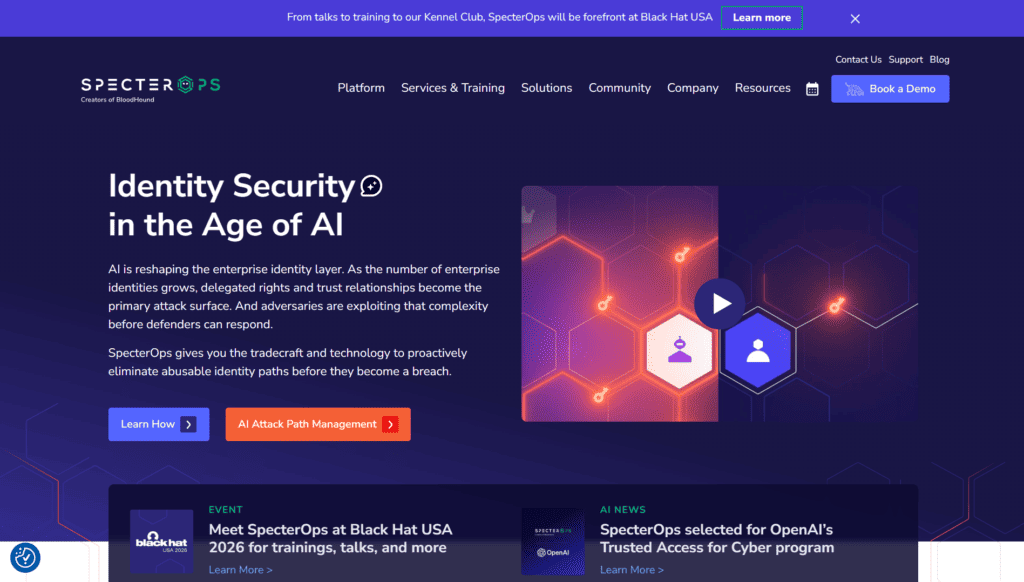
SpecterOps focuses on adversary simulation and identity attack paths, and the team earned wide recognition for creating BloodHound, a tool many defenders use to map Active Directory risk. Engagements lean toward realistic, objective-driven attacks that stress detection and response. That focus fits mature security teams that already run monitoring and want to test how well it holds. Organizations early in their security journey may want foundational testing first.
4. TrustedSec
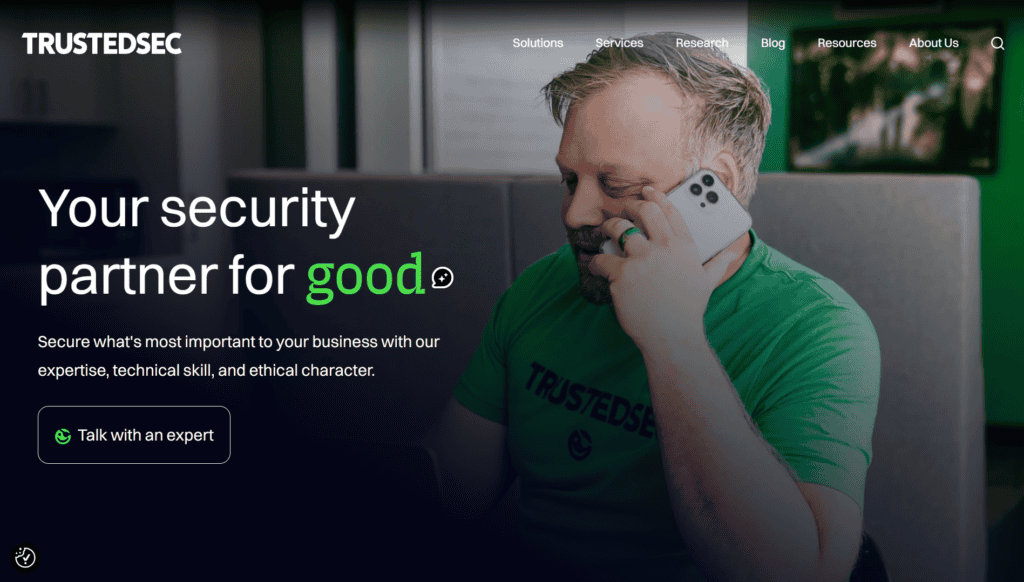
TrustedSec offers offensive consulting across red and purple teaming, along with program strategy for teams building their own capability. Founded by well-known practitioners, the firm blends hands-on testing with advisory work. It fits organizations that want to stand up an offensive program and need guidance as much as findings. Buyers looking purely for a fast, low-touch scan might prefer a more product-led option.
5. Mandiant (Google Cloud)
Now part of Google Cloud, Mandiant brings incident-informed red teaming and adversary emulation backed by frontline threat intelligence. Its testers draw on what real attackers are doing right now, which lends engagements a grounded, current feel. The firm suits large enterprises and regulated sectors that want offense tied to live threat data. Smaller teams may find the scale more than they need.
6. Kroll

Kroll connects offensive testing to digital forensics, incident response, and threat intelligence under one roof. That breadth appeals to organizations that want their offensive work feeding directly into response readiness. Engagements flex from focused tests to broader assessments. Companies seeking a nimble, single-service boutique should confirm how their project fits within a larger firm.
7. Rhino Security Labs

Rhino Security Labs is a research-driven boutique that specializes in cloud and AWS offensive testing, and the team authored Pacu, an open-source cloud exploitation toolkit. Its depth in cloud environments stands out. The firm fits cloud-native companies that carry most of their risk in AWS, Azure, or GCP. Organizations with heavy on-premise or physical needs may want a broader generalist alongside it.
8. Outpost24
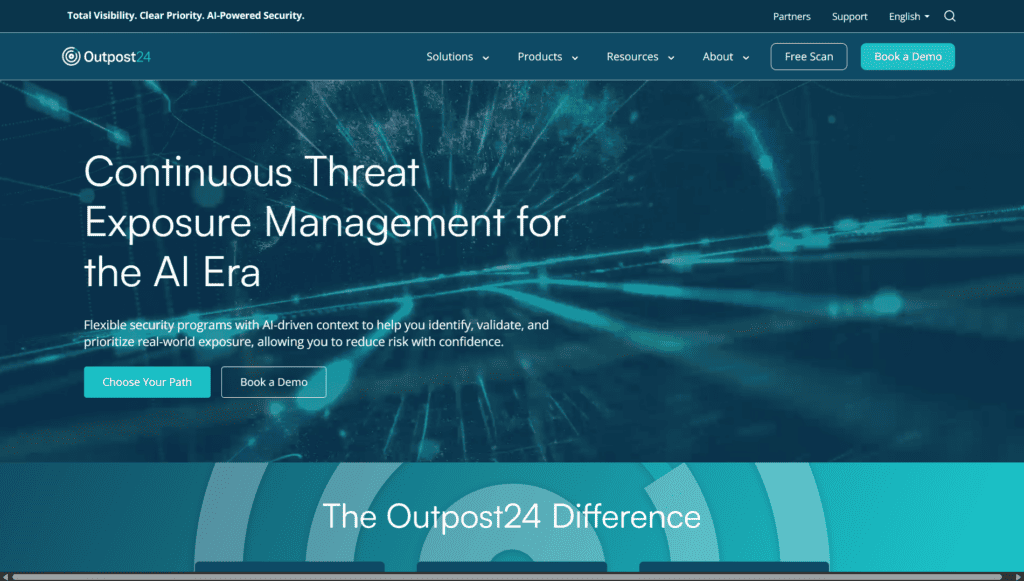
Outpost24 combines external attack surface management with red teaming on a single platform, giving buyers continuous visibility into exposed assets. The European firm leans toward ongoing exposure work rather than one-off tests. It fits teams that want to watch their external footprint change over time. Buyers who prefer a purely US-based provider should factor location into the decision.
9. Redbot Security
Redbot Security is a US boutique recognized for manual-led penetration testing and red team engagements, with reporting that emphasizes practical, hands-on detail. Its smaller size means senior testers often stay close to the work. It fits mid-market buyers who value people over platforms. Companies wanting a large, always-on automated layer may need to pair it with another tool.
10. NVISO
NVISO is a European boutique focused on purple teaming, adversary emulation, and detection engineering. Its work aims to improve how well your team spots and stops attacks, not just to find holes. The firm fits European organizations maturing their detection and response. Buyers outside Europe should check regional coverage and time zones before committing.
Matching a provider to your situation
You don’t need every capability at once. You need the ones that map to your risk today. Use these quick reads to narrow the field.
If you run an early-stage or scaling SaaS product, lean toward manual depth backed by a platform, plus predictable scoping you can budget around. If most of your risk lives in the cloud, weight your choice toward providers with proven cloud research rather than broad generalists. Compliance-driven teams chasing SOC 2, ISO 27001, or DORA should prioritize clear methodology, attestation, and threat-led coverage an auditor will accept. And if you’re trying to build detection maturity, purple teaming and adversary emulation will teach your defenders more than a standalone test ever could.
One more question tends to trip people up: frequency. If you’re unsure how often you should run these tests, let your release pace guide you. Teams shipping weekly benefit from continuous coverage, while slower-moving products can often work on a scheduled cycle.
Once you’ve matched capability to need, a few common questions usually remain.
Frequently asked questions
These are the questions buyers raise most once they’ve narrowed a shortlist, with short answers to round out your research.
How is offensive security different from defensive security?
Defensive security builds and monitors your protections, think firewalls, detection, and response. Offensive security tests those protections by attacking them under agreement. The two work best together, since offense finds the gaps and defense closes them. A good purple team engagement blends both in the same room.
Is offensive security just another name for ethical hacking?
Not quite. Ethical hacking describes the general practice of hacking with permission. Offensive security is the broader business function that plans, scopes, and delivers that hacking across pentesting, red teaming, and more. Red teaming, in turn, sits inside offensive security as one type of engagement focused on realistic, goal-driven attacks.
Should we build an in-house offensive team or outsource it?
It depends on scale and budget. In-house teams give you constant availability and deep context, but skilled offensive talent costs a lot and proves hard to retain. Outsourcing brings fresh eyes and specialized skills without the hiring headache. Many mature organizations do both, keeping a small internal team and bringing in outside firms for depth and independence.
Do we still need red teaming if we already run penetration tests?
Often, yes. A penetration test measures how exploitable a system proves to be. A red team exercise measures whether your people and detection tools would actually catch an attacker in motion. They answer different questions, so mature programs usually run both, just at different intervals.
Does offensive testing help with SOC 2, ISO 27001, or DORA?
It can. Many frameworks expect regular testing as evidence of a working security program, and a clean report with clear remediation supports an audit. DORA in particular pushes regulated financial firms toward threat-led testing. Always confirm the exact requirement with your auditor, since frameworks differ on scope and cadence.
What deliverables should we expect from a strong engagement?
Expect a clear report with an executive summary, detailed findings ranked by severity, reproduction steps, and practical remediation advice. Look for a retest to confirm the fixes worked, plus a debrief where you can ask questions. Real-time access to findings during the test speeds everything up and counts as a real bonus.
Choosing your offensive security partner
The best provider isn’t the biggest name. It’s the one that fits your attack surface, your maturity, and the way your team works.
Run each candidate through the same lens. Does the delivery model match how fast you ship? Does the scope cover where your real risk sits? Will the reporting help your developers fix things, not just read about them? When a vendor answers those three questions well, price turns into a fair comparison instead of a guess.
Take your shortlist, weigh it against the criteria here, and pick the partner that fits your situation rather than someone else’s.