When you’re already running penetration tests, the next question changes. You stop asking what’s vulnerable and start asking whether a real attacker could reach what matters most, and whether you’d even notice.
That’s the gap adversary simulation fills. It models how a determined threat actor behaves, then measures whether your people, processes, and tools hold up.
In this guide, we skip the basics. You already understand how red team pen testing actually unfolds, so we’ll focus on the decision in front of you: which provider fits your goals. The market splits into human-led service engagements and automated platforms, and this list covers services.
Below, you’ll find ten providers worth shortlisting, what each one focuses on, and a simple way to match a partner to your scenario. We start with the criteria, because a list only helps once you know what separates a strong fit from a poor one. Understanding your real adversary exposure begins there.
- CYBRI: Senior, manual-led simulation plus continuous automated scanning from one US-based partner.
- Bishop Fox: Deep, specialized offensive-security expertise.
- Mandiant: Intelligence-led emulation tied to incident response.
- CrowdStrike: Emulation linked to endpoint detection and response.
- IBM X-Force Red: Simulation backed by large-scale threat research.
- NCC Group: Consulting-led testing within broad assurance services.
- Praetorian: Hybrid human-led and platform-enabled testing.
- SpecterOps: Identity and Active Directory attack paths.
- Synack: Continuous, crowdsourced testing coverage.
- NetSPI: Simulation inside a broader offensive-security program.
How we evaluated these adversary simulation services
Once you’re in-market, surface-level reputation won’t carry the decision. You need consistent yardsticks you can apply to every vendor. So we measured each provider against the same set of dimensions, and you can reuse them in your own shortlist.
Here’s what matters most:
- Engagement depth. Does the team run full-scope, objective-based emulation, or scoped technique checks? Both have a place, but they answer different questions.
- Threat-intelligence grounding. Strong simulations borrow from current, real-world adversary behavior rather than generic scripts.
- MITRE ATT&CK alignment. When findings map to a shared framework, your defenders act on them faster. Mature teams often build threat models on OWASP, MITRE, and STRIDE before testing even begins.
- Breadth of vectors. Coverage can span digital, cloud, identity, and physical layers, plus where social engineering fits into an engagement.
- Detection-and-response validation. The best engagements measure whether your blue team spots the activity, not just whether the attacker gets in.
- Delivery model. One-time, continuous, crowdsourced, or platform-enabled: each suits a different program.
- Reporting and remediation support. Clear findings speed up fixes, so it helps to know what a thorough findings report should contain.
We applied these evenly. As you read the profiles, treat each “strong fit” line as a description of focus, not a ranking of quality. And remember the deeper point: adversary simulation reaches past the gap between scanning and true exploitation, which is exactly why these criteria matter.
The 10 best adversary simulation services in 2026
Every provider below earns its place for a different reason. To keep the comparison fair, we describe each one the same way: who they are, what they focus on, and the scenario they suit best. Read them as a set of options, not a leaderboard.
1. CYBRI
Best for: Teams that want senior, manual-led adversary simulation paired with continuous automated scanning, collaborative remediation, and a single accountable US-based partner.
CYBRI is a New York City-based offensive security firm that delivers manual-first adversary simulation and red team engagements. Its testers emulate real attacker behavior across web, cloud, network, and human vectors, and elite white-hat operators run its red team engagements with senior hands on every project.
Alongside those expert-led engagements, its platform now runs continuous, automated dynamic application security testing, monitors your external attack surface, and reviews cloud configuration across AWS and Azure, so exposure gets caught between formal tests as well as during them. It also alerts on changes inside your CI/CD pipeline, which keeps fast-moving releases under watch. Findings surface through its Blue Box delivery platform, so you see results as they land and start fixing issues mid-engagement, an approach that produces real-time results that speed up remediation.
2. Bishop Fox
Best for: Buyers who want deep, specialized offensive-security expertise and mature, scenario-driven red team support.

Bishop Fox is a private offensive security firm that specializes in objective-based red teaming and adversary emulation. The team runs modular engagements that flex to your goals, spanning external and assumed-breach scenarios, social engineering, and physical assessments. Its work aligns to the MITRE ATT&CK framework, and it pays close attention to whether your alerting, logging, and escalation paths actually fire during an attack. Beyond one-time projects, Bishop Fox offers continuous testing and purple-team collaboration, so defenders learn alongside the operators. The firm also publishes widely read research, which keeps its tradecraft current.
3. Mandiant (Google Cloud)
Best for: Large enterprises and mature security operations centers that want intelligence-informed emulation tied to incident-response experience.
Mandiant, now part of Google Cloud, built its reputation on frontline incident response and threat intelligence. Its consultants run red and purple team assessments that emulate a real attacker pursuing custom objectives across enterprise and cloud environments. Because the firm investigates major breaches worldwide, it grounds each scenario in current attacker behavior and maps activity to ATT&CK tactics. Mandiant also brings global delivery and long experience working with large enterprises and government agencies. For organizations that want emulation shaped by what attackers do right now, that intelligence link carries real weight.
4. CrowdStrike
Best for: Enterprises that want intelligence-driven emulation closely tied to endpoint detection and response.
CrowdStrike is a global cybersecurity company whose Services Red Team draws on its Falcon platform and incident-response investigations. The team builds adversary emulation exercises around the latest tactics, techniques, and procedures seen against organizations in your industry. Rather than simply gaining access, it focuses on objective-based testing that shows the business impact of a gap. CrowdStrike also pairs red-team activity with blue-team exercises, so your responders practice detecting and containing the attack as it unfolds. Throughout, it evaluates maturity across each phase of the MITRE ATT&CK framework.
5. IBM X-Force Red
Best for: Organizations that want adversary simulation backed by a large vendor’s threat-intelligence research and global reach.
IBM X-Force Red is the company’s offensive security team, and it offers adversary simulation as a named service line. You can choose customized red teaming, purple teaming, threat-intelligence-based testing, or managed testing, depending on where you sit in your security journey. Each exercise sets out to test your tooling and measure how quickly your incident-response team detects and contains an attack. X-Force Red maps techniques to the MITRE ATT&CK framework, which helps you tune controls afterward. Backed by IBM’s research, the team also folds fresh threat intelligence into its scenarios.
6. NCC Group
Best for: Enterprises that want a consulting-led provider combining offensive testing with broad assurance services.
NCC Group is a global cybersecurity and risk-mitigation firm with an established attack-simulation practice. It offers the full spectrum of simulation, from red and purple teaming to black-team attacks and gold-team crisis exercises. The team tests digital, physical, and human controls, and it leans on intelligence-led, scenario-based engagements tailored to your industry. Attack-path mapping and regulatory-aligned assessments round out the portfolio, which suits complex, multinational environments. Because simulation sits inside a much broader assurance practice, you can connect it to wider security work.
7. Praetorian
Strong fit for: Teams that want a hybrid model pairing expert-led red teaming with continuous, platform-enabled validation.
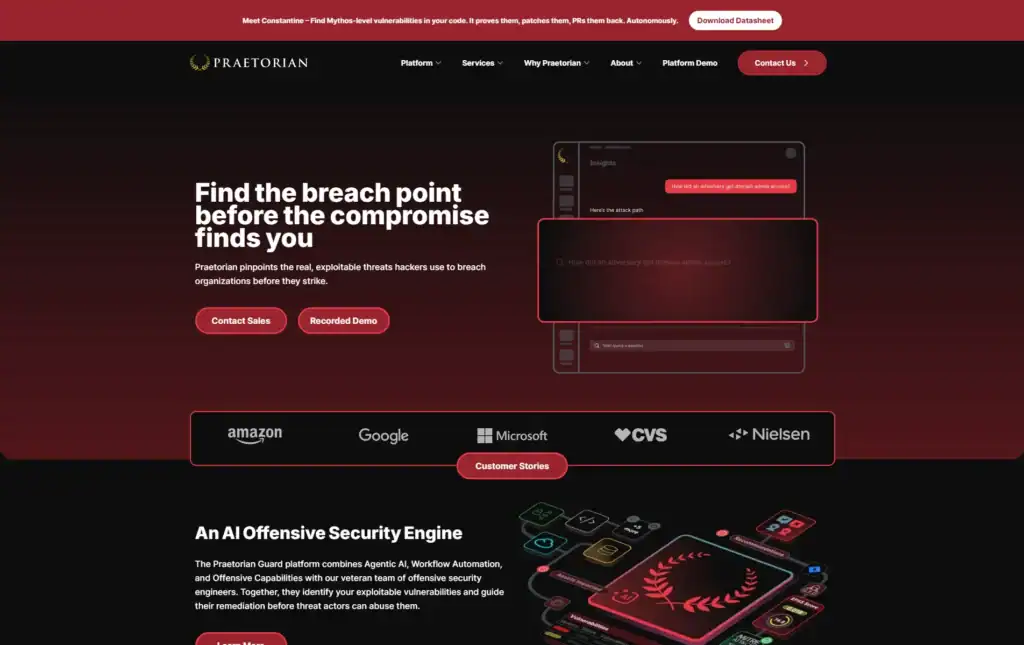
Praetorian is an offensive security company that blends human-led red teaming with its Chariot platform. Its operators run full-scope adversary emulation across people, process, and technology, including social engineering and physical testing. During purple-team exercises, the team replays attack chains interactively with your defenders and benchmarks the results against MITRE ATT&CK. Between engagements, Chariot supports continuous adversarial exposure validation, so you keep testing as your environment changes. A dedicated research group develops new techniques and tooling, which keeps assessments aligned with the current threat landscape.
8. SpecterOps
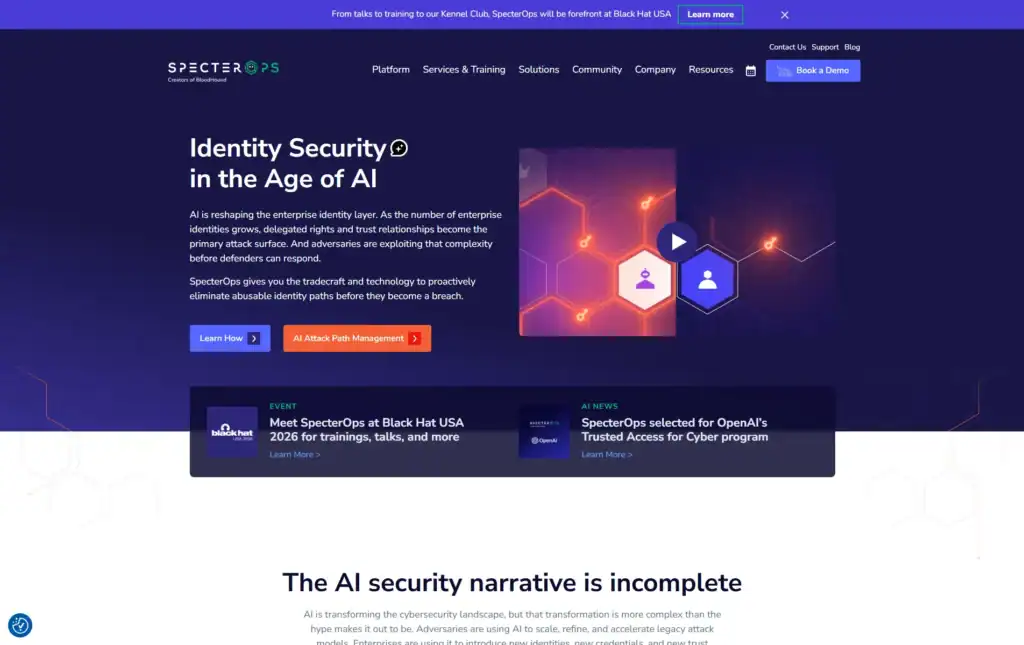
Best for: Organizations that prioritize identity-driven attack paths and advanced, research-backed adversary tradecraft.
SpecterOps is an adversary-focused firm known for identity-centric tradecraft and the widely used BloodHound project. Its specialists replicate advanced threat-actor behavior, with particular depth in Active Directory and identity attack paths. The company offers independent assessments, assessment-operations support, internal program development, and training, so you can buy a single engagement or build a longer-term capability. Because its researchers contribute heavily to the community, the team brings cutting-edge methods to each project. That identity focus matters, since many real intrusions hinge on credentials and trust relationships.
9. Synack
Strong fit for: Enterprises and agencies that want continuous, crowdsourced testing coverage across fast-moving assets.
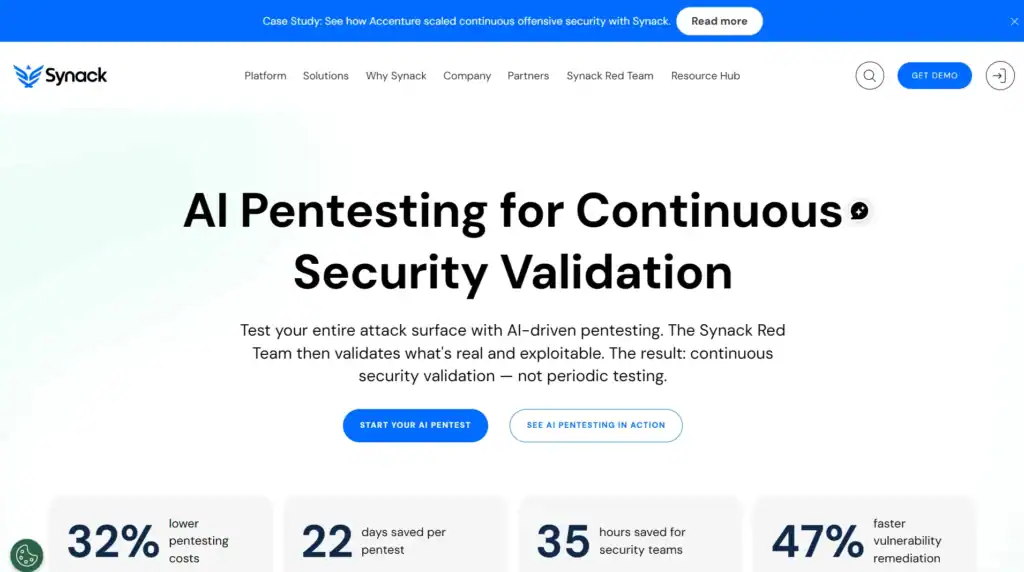
Synack delivers adversary simulation through a platform built around the vetted Synack Red Team. It combines a global community of highly screened researchers with an AI-supported platform, which together enable continuous, on-demand testing. You get real-time validation of your controls and structured reporting that your team acts on quickly. All of the work runs inside a controlled, virtualized environment, so you keep oversight of scope and capacity. For dynamic assets that change often, that always-on model keeps coverage current.
10. NetSPI
Best for: Buyers who want adversary simulation embedded in a broader, program-level offensive-security relationship.
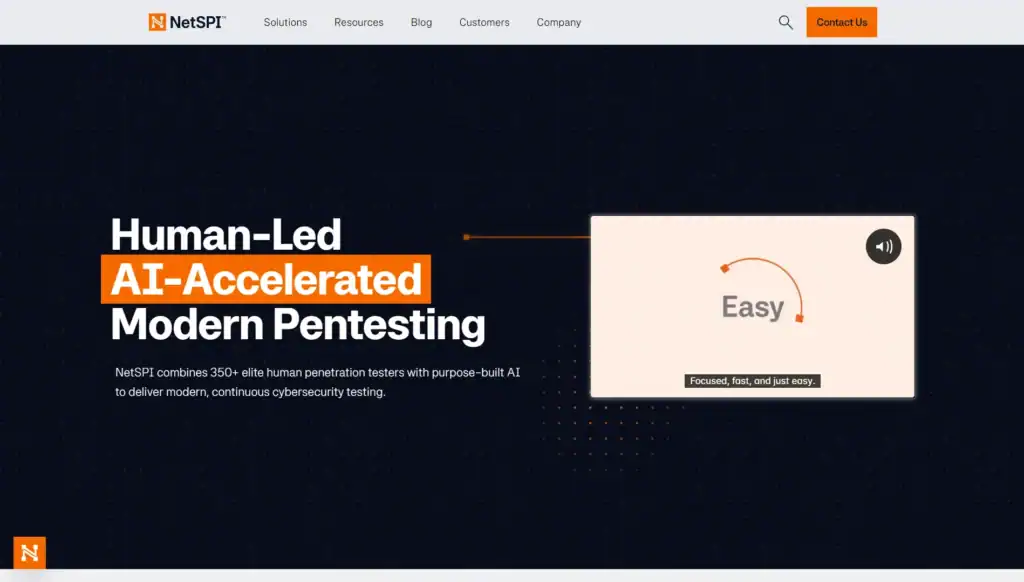
NetSPI is an offensive security provider that offers red teaming alongside broad penetration testing and attack-surface management. It delivers adversary simulation as part of a wider program that spans applications, networks, and cloud. Because the firm also tracks your external attack surface continuously, it connects simulation findings to ongoing visibility and program maturity. That structure helps if you’re weighing red team work next to other testing services under one roof. As a result, you can scale the relationship as your security needs grow.
Taken together, these ten cover the realistic range of choices: boutique and manual-led at one end, large and intelligence-driven at the other, with identity specialists and platform-enabled models in between. Your shortlist will narrow fast once you weigh objective, maturity, and environment, which the next sections help you do.
Adversary simulation services vs. automated platforms
While you compare service providers, you may also weigh automated breach-and-attack-simulation (BAS) and exposure-validation platforms such as Cymulate, SafeBreach, Picus, and AttackIQ.
They solve a related problem from a different angle, so it helps to see how the two categories differ before you choose.
- Human-led services adapt in real time, chain creative attack paths, and judge business impact the way an actual adversary would.
- Automated platforms validate controls continuously, repeatably, and at scale, which suits ongoing assurance.
In practice, mature programs often run both: periodic human-led simulation plus continuous automated checks. Still, automation has limits, and it’s worth understanding why automation alone leaves blind spots that only a creative operator tends to catch.
Coverage matters too, and continuous testing keeps pace with change as your systems evolve.
This guide stays focused on services, so let’s turn to matching one to your situation.
How to choose the right adversary simulation partner
Before you sign anything, define your objective, your security maturity, and the environment you need tested. With those clear, the match usually becomes obvious.
Use this quick guide to point yourself in the right direction:
- If you want senior, manual-led testing with hands-on remediation, look at boutique, services-first firms.
- If you need intelligence-led emulation tied to incident response, consider large, threat-intel-rooted providers.
- If you’re focused on identity and Active Directory, an identity specialist fits.
- If you want continuous or crowdsourced coverage, platform-enabled and crowdsourced models work well.
- If you need offensive testing inside a broader program, a full-spectrum partner makes sense, and you can scope a broader offensive security program from the start.
Whoever you shortlist, ask the same questions. How do you set scope and objectives, and how does the reconnaissance work that opens an engagement shape the plan? Do you map findings to ATT&CK? How do you validate detection and response? What does the report look like, and do you support retesting? Pushing for specifics, including how a team handles pivoting deeper once a foothold exists, tells you a lot about depth.
In short, a clear objective up front shapes which model fits. Nail that, and the rest of the decision follows.
Choosing your adversary simulation partner
There’s no single “best” adversary simulation service, only the best fit for your objective, your maturity, and the environment you need tested. Boutique firms bring senior, manual depth. Large providers bring intelligence and scale. Specialists and platforms cover everything in between.
Whatever you choose, start with a clearly scoped objective. It shapes the model, the vectors, and the way you’ll measure success. When you’re ready to map that out, you can talk through a scoped engagement and turn this shortlist into a plan.