What is BreachLock?
BreachLock is a PTaaS provider that blends automated tools with manual expertise to deliver cloud-based penetration testing on demand [1]. Through its unified SaaS platform, clients can request tests and receive real-time updates on findings, which streamlines the traditionally lengthy pentesting process. Key differentiators for BreachLock include built-in compliance reporting and continuous testing capabilities.
For example, BreachLock offers assessments aligned to standards like PCI DSS, HIPAA, and SOC 2, and it provides ongoing re-testing and scalability for organizations that need frequent security checks. In practice, BreachLock’s model appeals to companies that want scalable, compliance-ready pentesting without building an internal security team; in fact, it’s described as ideal for businesses in regulated sectors or those lacking in-house expertise who need efficient testing at scale.
What to Consider When Evaluating BreachLock Alternatives
When exploring alternatives to BreachLock, it’s important to weigh what your organization values most in a penetration testing service. The actual testing model is often one of the primary considerations. A platform-driven model often provides speed and continuous testing through automation. On the other hand, a boutique consulting approach or an enterprise-scale firm often offer deeper manual testing and customized engagements.
Industry Focus
At the same time, some providers specialize in certain industries or compliance areas, which can be important in terms of compliance or specific knowledge. For instance, SaaS startups might lean toward agile pentest platforms, whereas government or defense organizations might require vendors with specific clearances or sector expertise.
Engagement Style
Also consider if you need one-off project-based pentests or a continuous testing relationship. BreachLock and similar PTaaS platforms excel at continuous or frequent testing, providing ongoing security feedback. In contrast, traditional consultants might engage in a short-term project and deliver a report.
Pricing & Flexibility
Pricing models can vary widely. BreachLock offers tiered packages with quotes on request. Alternatives range from fixed-price engagements to subscription models or credit-based systems. Determine your budget and need for pricing transparency. Smaller organizations might prefer predictable, fixed pricing for budgeting, while larger enterprises might be comfortable with custom quotes for a tailored scope.
Support & Remediation
Finally, don’t forget to look at the depth of support each provider offers for remediation and follow-up. Some platforms, such as Cybri, provide interactive dashboards, real-time collaboration with testers, and built-in ticketing integration for fixing issues with Jira and so on. Other providers might simply deliver a PDF report.
BreachLock Alternatives: A Company-by-Company Breakdown
1. Cybri
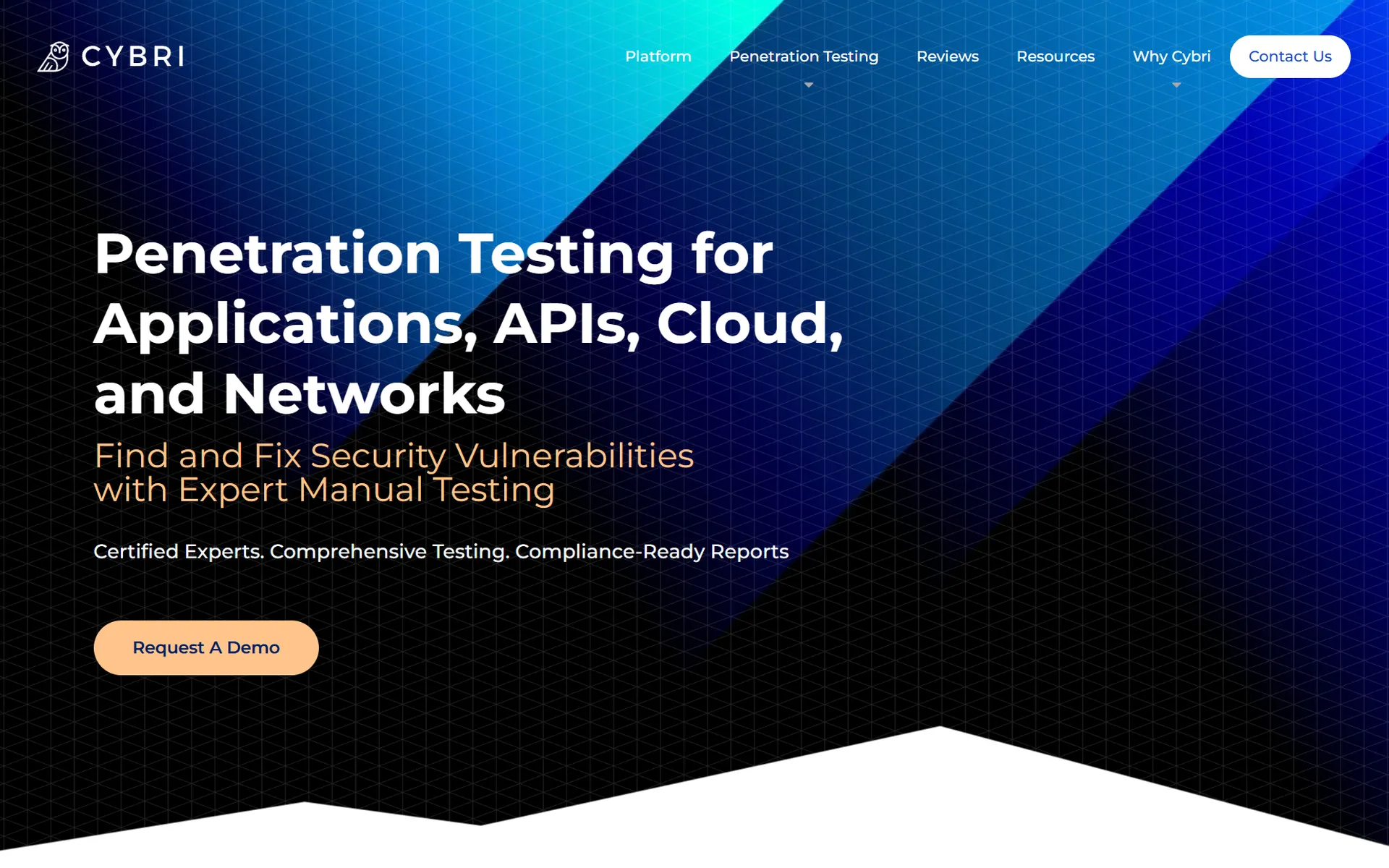
Cybri is a web app penetration testing company that delivers tests on an on-demand, fixed-price basis through its PTaaS platform. Cybri’s model employs a hand-picked team of vetted ethical hackers who perform each test, while clients interact through an online portal known as Bluebox [2].
Cybri’s services cover a broad category of assets and applications, including mobile apps, network & infrastructure, APIs, cloud environments and LLM models. They support large industries such as fintech, financial institutions, and healthcare, with specialist verticals such as SaaS and Merger & Acquisitions. Cybri also supports organizations in meeting particular compliance requirements such as SOC 2, HIPAA, and PCI DSS.
One of Cybri’s core strengths is the balance it strikes between speed and quality. Tests can be launched quickly while maintaining high quality through experienced human testers, as every engagement is handled by dedicated Red Team members. All findings are manually verified, and Cybri provides clear, actionable reports to help remedy issues.
For organizations that appreciate BreachLock’s on-demand model but seek a more high-touch experience, Cybri is a strong contender. Cybri offers a convenient platform and quick turnaround, while augmenting automation with deeper human expertise.
Overall, Cybri delivers a blend of speed, quality, and collaboration that makes it an excellent alternative for organizations that want the scalability of a platform without sacrificing the personal touch of a boutique service.
2. NCC Group

NCC Group is a global cybersecurity consulting firm specializing in comprehensive, manual penetration testing. Their services cover web and mobile applications, networks, cloud infrastructure, and niche areas like IoT and blockchain [3].
The primary strength of NCC Group lies in their deep technical expertise and resources, thanks to a full-time team of certified security consultants around the globe. This makes it possible for them to tackle complex, large-scale projects beyond the reach of smaller firms or automated platforms.
For smaller companies or those with tight budgets, NCC’s services might be overkill, as their methods tend to be rather formal and complex to set up, with more paperwork, scoping formalities, and even longer wait times.
Large organizations looking for an alternative to BreachLock often cite a need for more hands-on expertise or a broader testing scope. If your priority is depth, thoroughness, and the credibility of a long-established security firm, NCC Group offers an interesting choice.
3. Bishop Fox

Bishop Fox is a well-known US-based offensive security firm, recognized in the field of penetration testing and red teaming. Their services range from classic penetration testing to full-scale red team operations. They also offer a platform-driven continuous testing service called Cosmos.
Bishop Fox’s reputation is built on technical excellence. Their team of skilled hackers perform manual tests, effectively blending automated tooling with human creativity in their hybrid approach. They also provide reporting and analytics, including a portal with real-time analytics and visualizations of security posture.
A potential drawback is availability and cost. As a premier firm, their services are in high demand and priced at a premium, which can exclude smaller businesses. Their expert-driven model also has a natural capacity limit.
For businesses that found BreachLock’s automated approach insufficient for uncovering subtle threats, Bishop Fox is a strong alternative. They offer an expert-driven, adversarial mindset, applying the perspective of professional hackers.
4. NetSPI

NetSPI is a penetration testing firm with a strong enterprise focus, offering technology-enabled service delivery. They provide manual testing augmented by their proprietary platform for managing tests and results [4]. Their services span application, network, and cloud testing, as well as red teaming.
NetSPI’s hybrid model combines the depth of manual testing with platform efficiencies. A key strength is their support for unlimited retesting and SLA tracking through their platform, which is valuable for large organizations.
NetSPI is geared toward larger enterprises, which can be a drawback for smaller companies. Their pricing is custom, requiring a quote. While their platform speeds up reporting, the initial scoping process can still be time-intensive.
NetSPI is an attractive BreachLock alternative for organizations that liked the idea of a PTaaS platform but want a more white-glove, enterprise-level service. Their manually curated findings, with extensive context on exploitability, are a significant benefit.
5. Cobalt

Cobalt is a PTaaS provider, provider that uses a crowdsourced model. Their platform, Cobalt Core, connects clients with a global community of vetted freelance security researchers, emphasizing speed, flexibility, and real-time collaboration [5].
Cobalt’s key strength is agility. They can often begin a pentest within 24 hours due to their large, on-demand pool of global talent, and this speed can be highly appealing to startups and fast-moving tech companies.
The crowdsourced model can introduce variability. While testers are vetted, experience levels differ, and outcomes may depend on who is assigned. More conservative enterprises may also prefer a dedicated team over external contractors.
Cobalt is often compared directly with BreachLock as both are PTaaS, but their philosophies differ. It is a good alternative for those who found BreachLock’s automated approach lacking, as it uses human researchers to find subtler flaws, however their model requires multiple external testers which can be limiting for some companies.
6. Synack

Synack is a crowdsourced security testing platform combining a vetted global hacker community with an AI-enabled platform to deliver continuous penetration testing. The core of Synack’s offering is the Synack Red Team (SRT), an invite-only group of security researchers who are cleared and skilled in various areas.
Synack’s strengths are breadth and control. Their large pool of global researchers makes it possible to provide broad coverage and continuous attention, allowing vulnerabilities to be found and reported at any time. The platform provides detailed findings with reproduction steps, and researchers are often available for discussion.
The primary drawbacks are significant onboarding overhead, including deploying a secure gateway VM, and a premium cost structure suited for large enterprises. Organizations must also have the maturity to manage a continuous stream of findings, which requires dedicated internal resources and coordination.
Synack is an interesting alternative for organizations wanting a more continuous and rigorous testing model. If BreachLock feels too periodic, Synack’s model can catch issues between releases. Both use automation, but Synack places greater emphasis on human ingenuity for finding complex vulnerabilities.
Why Cybri is a Strong Alternative to BreachLock
Cybri stands out as a strong alternative to BreachLock, especially for organizations seeking a balance of speed, quality, and collaboration. While matching BreachLock’s speed, Cybri adds greater collaboration as their platform facilitates direct interaction with the Red Team for clarification and remediation advice [6].
Additionally, Cybri’s use of highly vetted US-based ethical hackers can be a selling point for those concerned about data jurisdiction or language/timezone barriers in working with testers. When comparing directly, Cybri can match BreachLock on convenience and outpace it on personalization and flexibility, making it a compelling alternative for many use cases.
Final Thoughts & Next Steps
BreachLock is a strong PTaaS platform and may very well fit the needs of some organizations, but it’s certainly not the only option on the market. Depending on your priorities, you might lean towards a large enterprise consulting firm for unparalleled depth, a specialized offensive security team, or a modern crowdsourced platform, or a hybrid model.
For organizations seeking a balanced approach that blends speedy delivery, high-quality manual testing, and collaborative support, Cybri is positioned as an excellent choice. It offers the user-friendly experience of a platform without compromising on the human expertise and customer care that ensure testing truly improves security posture.
Ready to explore a BreachLock alternative? Connect with Cybri’s Red Team for a tailored scoping call.
References
- Software Secured. (n.d.) Top 10 Penetration Testing Companies (2025)
- G2. (n.d.) Cybri Reviews & Provider Details
- NCC Group. (n.d.) NCC Group at a glance
- NetSPI. (n.d.) Activate Proactive Security With The NetSPI Platform
- Cobalt. (n.d.) Meet Your Elite, Vetted Pentester Community
- Cybri. (n.d.) Penetration Testing Company