A SOC 2 Type 2 report covers how your security controls worked over a period of time, usually 3 to 12 months. A penetration test is one of the main pieces of evidence auditors look for in that period: a dated report from an independent tester, plus proof that the findings were fixed and retested.
That makes the choice of testing company a timing and paperwork decision as much as a technical one. This list compares ten companies whose own sites connect their penetration testing to SOC 2, with a note on who each one suits. CYBRI’s SOC 2 penetration testing guide covers the requirement itself in more depth.
The ten companies on this list:
- CYBRI: best for SaaS companies that want manual-first testing with findings mapped to the Trust Services Criteria
- Software Secured: best for product teams that want reports synced to their compliance platform and a long retest window
- Cobalt: best for teams that want on-demand testing through a platform
- A-LIGN: best for companies that want the SOC 2 audit and the pentest from one firm, run by separate teams
- Prescient Security: best for companies that want a CREST-certified tester with an audit practice in the same group
- Insight Assurance: best for companies already working with Insight Assurance on SOC assessments
- Raxis: best for teams that want the test and retest scheduled inside the Type 2 observation window
- HackerOne: best for companies that want recurring tests from a large community of vetted pentesters
- Blaze Information Security: best for teams that want an attestation letter to share with customers
- Schellman:best for companies already auditing with Schellman that want to add testing
How Penetration Testing Fits a SOC 2 Type 2 Audit
Type 1 vs Type 2
| SOC 2 Type 1 | SOC 2 Type 2 | |
| What it checks | Whether controls are designed properly at a single point in time | Whether controls worked as intended over a period, usually 3 to 12 months |
| When to test | Shortly before the report date | Inside the review period the audit covers |
| What the auditor wants to see | A recent test and a plan for the findings | A test dated inside the period, with findings fixed and retested |
Is a Pentest Required?
Not by name. SOC 2 is built on criteria, not a checklist. The AICPA’s points of focus for criterion CC4.1 list penetration testing as an example of the evaluations management can use, and most auditors expect one for the Security category.
Timing Is the Hard Part
For Type 2, the test and the retest both need to land inside the review period. Finish the test two to three months before the period ends, so there is time to fix findings and have them rechecked. CYBRI’s post on how remediation testing supports SOC 2 Type 2 explains why the retest matters as much as the first report.
Auditor and Tester: Same Firm or Separate?
Some audit firms also sell penetration testing, which keeps everything in one contract. Firms that do both describe separate teams for the two jobs. Other companies prefer a dedicated testing firm that has no part in the audit. Both models are common, and your auditor can tell you what they accept.
How These Companies Were Chosen
- SOC 2 named in writing. The company’s own site connects its penetration testing to SOC 2.
- Penetration testing offered as a named service, with people leading the work.
- Reports an auditor can use. Findings with evidence, severity, and fix guidance.
- An established practice with a public track record.
Each profile records what the company publishes. If something isn’t mentioned, such as retest terms, ask about it when scoping.
SOC 2 Type 2 Penetration Testing Companies: 10 Options for Your Audit Period
1. CYBRI
Best for: SaaS companies that want manual-first testing with findings mapped to the Trust Services Criteria
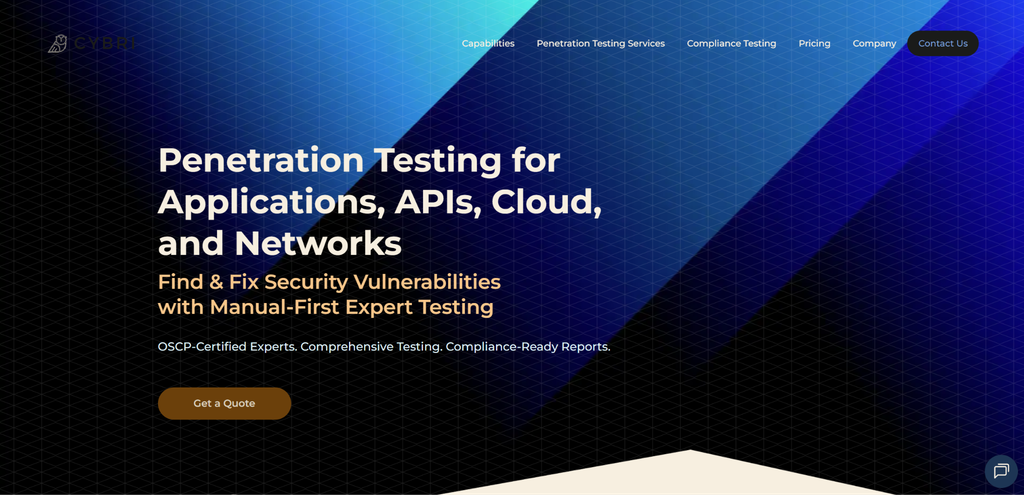
CYBRI is a New York penetration testing company that has worked mainly with SaaS companies since 2017. Its SOC 2 penetration testing is manual-first, follows OWASP and NIST methodologies, and covers web and mobile apps, APIs, infrastructure, and cloud configuration, scoped to the systems in your SOC 2 report.
OSCP-certified testers start from a login for each user role, which is where access-control findings tend to sit. The report pairs an executive summary and risk scores with technical findings, mapped controls, and fix guidance, followed by a debrief call. Average turnaround is 7 to 14 days. Remediation support and a retest inside a 90-day window are part of the quote, which gives a Type 2 audit the dated proof of fixes it needs.
2. Software Secured
Best for: product teams that want reports synced to their compliance platform and a long retest window
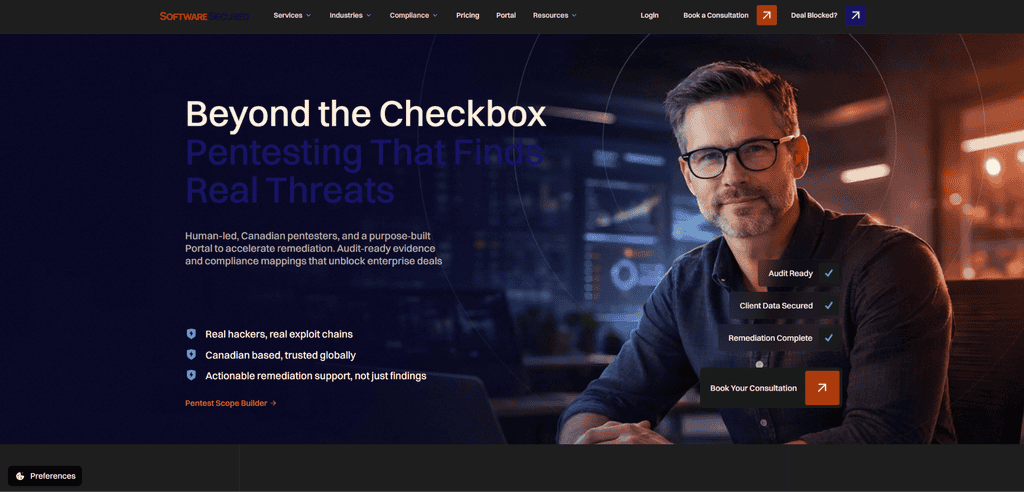
Software Secured describes itself as Canadian based and trusted globally. Its SOC 2 penetration testing maps findings to SOC 2 controls, with CC4.1, CC7.1, and CC7.2 named in the mapping, and its reports sync to Vanta and Drata so the evidence is already in the compliance platform when the auditor asks.
The process is laid out with timings: onboarding within 24 to 48 hours, a report within 48 to 72 hours of the test finishing, and retesting that can be requested within 12 months of report delivery. A secure code review is available as an add-on. It suits a team that wants a clear schedule and room to retest later in the audit period.
3. Cobalt
Best for: teams that want on-demand testing through a platform
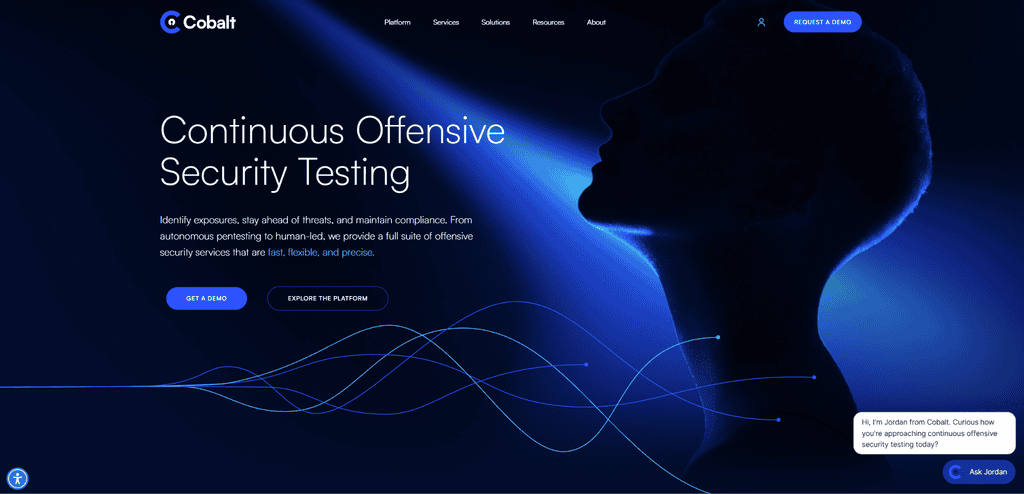
Cobalt describes itself as the company that pioneered pentesting as a service. Its compliance testing is built around speed: tests start within one to three business days depending on the plan, and reports are written to meet SOC 2, ISO 27001, PCI DSS, and HIPAA. The company offers what it calls audit-quality attestation reports and letters.
Testers come from the Cobalt Core, described as more than 500 pentesters, and the engagement runs through a platform with real-time communication. Free retesting is included during the contract term, and Cobalt is a Vanta partner. It fits a team that wants to fit tests around releases and still have evidence ready for the audit.
4. A-LIGN
Best for: companies that want the SOC 2 audit and the pentest from one firm, run by separate teams
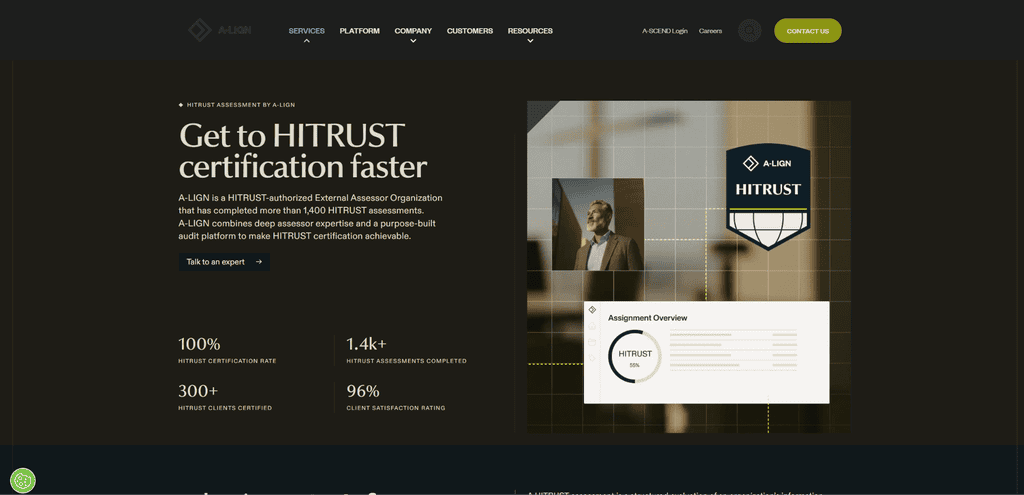
A-LIGN is a compliance firm based in Tampa, Florida, that performs SOC 2 audits and also runs penetration tests. It reports more than 4,600 completed penetration testing engagements for over 850 clients, done by OSCP, OSCE, and OSEE-certified testers.
A-LIGN says the testing practice is “backed by the same firm already running your compliance program, handled by two separate, independent teams,” and that its testing satisfies compliance needs for SOC 2 and ISO 27001. Coverage includes external and internal networks, web applications, cloud, and hybrid environments, sold in tiered packages. It suits a company that wants one vendor for the audit and the test.
5. Prescient Security
Best for: companies that want a CREST-certified tester with an audit practice in the same group
Prescient Security describes itself as a CREST-certified penetration testing company. Its compliance penetration testing is designed around regulatory requirements, “with a significant focus on SOC 2 and ISO standards,” and follows methodologies such as OWASP and PTES.
Testing is delivered through Cacilian, its own penetration testing as a service platform, alongside traditional project-based tests. Prescient Assurance, a licensed CPA firm in the same group, provides audit and attest services. That structure suits a company that wants testing and audit work to be closely coordinated.
6. Insight Assurance
Best for: companies already working with Insight Assurance on SOC assessments
Insight Assurance offers SOC 1, SOC 2, and SOC 3 assessments along with ISO, federal, and healthcare assessments. Its penetration testing is sold as independent, third-party assessments tailored to each environment.
Areas of focus include web applications, tested for OWASP Top 10 vulnerabilities with manual techniques and tooling, RESTful and GraphQL APIs, iOS and Android apps, and wireless networks. Remediation validation is listed as a separate service. For a company that already has its SOC work with Insight Assurance, adding the test keeps the evidence with a firm that knows the audit.
7. Raxis
Best for: teams that want the test and retest scheduled inside the Type 2 observation window
Raxis speaks to Type 2 directly. Its SOC 2 page says a senior engineer tests the system your report describes, and that for a Type II report it schedules “the test and the retest inside the period your auditor examines, so both count as evidence.” Findings cite the Trust Services Criteria they relate to.
Testing is done by senior, US-based engineers and comes in two forms: Raxis Strike, a fixed-window test, and Raxis Attack, continuous testing with findings in real time and retests through the year. Raxis also completes its own SOC 2 Type 2 examination every year. It suits a team that wants the tester to plan around the audit calendar.
8. HackerOne
Best for: companies that want recurring tests from a large community of vetted pentesters
HackerOne is known for bug bounty programs and also sells penetration testing. Its SOC 2 guidance says its pentest as a service model lets a company “set up pentesting on a periodic schedule for annual checks which is especially important for Type II.”
Tests are carried out by what the company calls a network of highly vetted pentesters. H1 Agentic Pentest pairs AI agents with expert human pentesters for web applications and APIs, and H1 Pentest extends coverage to networks, mobile, and cloud, with a fully human-led option. It fits a company that wants testing on a repeating schedule with a wide pool of specialists.
9. Blaze Information Security
Best for: teams that want an attestation letter to share with customers
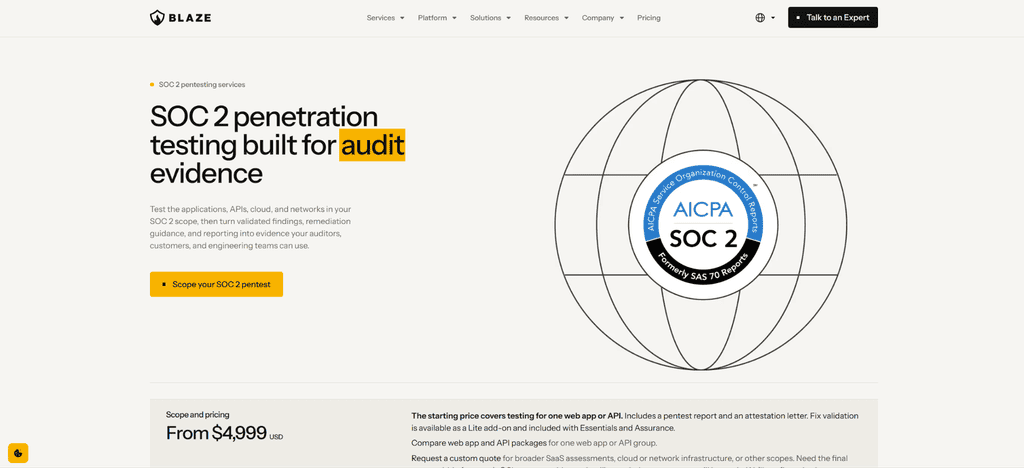
Blaze Information Security sells SOC 2 penetration testing “built for audit evidence.” It tests the applications, APIs, cloud, and networks in the SOC 2 scope and delivers a pentest report and an attestation letter, with a sample letter available on its site.
Reports note the applicable Trust Services Criteria, and Blaze adds that your auditor decides whether the evidence is sufficient. Fix validation is available, and testing can also be bought through its PTaaS platform. It suits a company that needs a document for customer security reviews as well as for the auditor.
10. Schellman
Best for: companies already auditing with Schellman that want to add testing
Schellman is a Tampa, Florida, firm that performs SOC 1, SOC 2, and SOC 3 examinations and runs a penetration testing practice. Testing covers web applications, APIs, and client-side applications, internal, external, and wireless networks with segmentation testing, iOS and Android apps, and social engineering.
A free sample report modeled on a real engagement is available on its site. For a company that already uses Schellman for SOC 2, adding testing keeps the audit and the evidence with one firm.
How to Choose a SOC 2 Type 2 Pentest Partner
| Criteria | What to look for |
| Timing | A test and a retest that both fall inside your review period |
| Scope | The systems named in your SOC 2 system description: the app, its APIs, and the cloud accounts behind it |
| Logged-in testing | An account for each user role, so testers check who can reach whose data |
| Criteria mapping | Findings tied to the Trust Services Criteria they affect |
| Retesting | Whether a retest is included, how long the window runs, and whether the report is updated |
| Auditor or tester | Whether you want one firm for both, or a tester separate from your auditor |
Final Thoughts
Each company here can produce penetration test evidence for a SOC 2 Type 2 audit. The audit firms make sense if you want one contract. Platform-based providers suit teams that test often. For a SaaS company that wants a manual test built around the audit, CYBRI is the strongest fit: OSCP-certified testers log in as every user role, findings are mapped to the Trust Services Criteria, and a retest inside a 90-day window is part of the quote. Contact CYBRI to plan the test around your review period.
Frequently Asked Questions
Does SOC 2 Type 2 require a penetration test?
Not by name. The criteria don’t order one, but penetration testing is listed as an example evaluation under CC4.1, and most auditors expect a test dated inside the review period.
When should the test happen in a Type 2 period?
Early enough to fix and retest. Finishing the test two to three months before the period ends is a common target. If the deadline is close, see how to get a SOC 2 pentest report on a tight deadline.
Can our SOC 2 auditor also run the pentest?
Some audit firms offer both and describe separate teams for each. Ask your auditor how they handle independence, and decide whether you’d prefer a separate testing firm.
Can we reuse last year’s pentest report?
No. The auditor expects a test from inside the current review period, so plan on a new test each year and after major changes.
Ready for a SOC 2 Type 2 Pentest?
CYBRI runs manual, senior-led testing scoped to your SOC 2 systems, with findings mapped to the Trust Services Criteria, an auditor-ready report, and a retest inside a 90-day window. Get a quote to scope it.