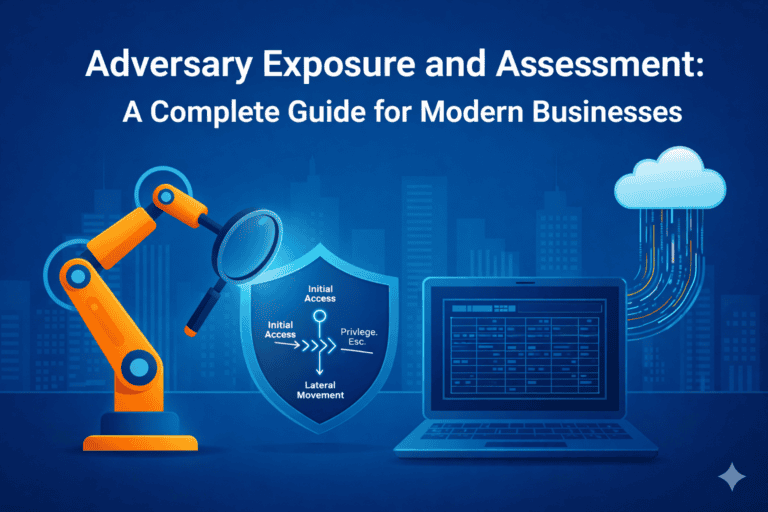
If you’ve reached the shortlisting stage, you already know what VAPT does and why your business needs it. What you need now is a clear set of credible partners and a consistent way to weigh one against another. This guide gives you both: ten companies worth a closer look, plus the criteria that separate a routine scan from testing you can actually act on. You’ll find each provider described the same way, so you can compare them on the things that matter to your scope rather than on marketing language. Before you dig in, it helps to remember where a vulnerability assessment ends and a penetration test begins, because the strongest VAPT engagements lean on both.
- CYBRI: SaaS teams wanting manual testing plus continuous coverage.
- BreachLock: Teams that need frequent, scalable testing on a single platform.
- HackerOne: Enterprises layering pentests onto a bug bounty program.
- Praetorian: Large enterprises running ongoing exposure management.
- NCC Group: Regulated, multinational organizations needing broad coverage.
- Coalfire: Compliance-driven testing tied to audits like FedRAMP and PCI DSS.
- GuidePoint Security: Folding testing into a wider security advisory program.
- Raxis: Buyers who prioritize hands-on, manual-first testing.
- IOActive: Specialized hardware, embedded, and ICS environments.
- Software Secured: Product teams embedding security into the development cycle.
How we compared these VAPT companies
Here’s how we evaluated each company. Use this as a way to build your own scorecard, then hold each company against it.
- Testing depth. Look at how much of the work is human-led. Automated scanners catch known issues quickly, but senior testers prove the business-logic and authorization flaws that real attacks exploit.
- Delivery model. Decide whether you want a point-in-time project or the ability to test on a rolling basis rather than once a year. Your release cadence usually points to the answer.
- Compliance alignment. Confirm the provider maps findings to the frameworks your auditors care about, so the engagement doubles as evidence.
- Reporting quality. You want a report that maps findings to clear remediation steps, not a wall of raw scanner output.
- Retesting. Ask whether the provider will confirm fixes hold through retesting once your team has patched.
Keep those five in mind as you read. They turn a long list of names into a decision you can defend to your team and your auditors.
Our pick: the 10 best VAPT companies in 2026
Here’s a quick side-by-side before the detailed profiles. Tthe right fit depends on your environment and goals.
| Company | Headquarters | Delivery model | Core VAPT focus | Typical buyer |
|---|---|---|---|---|
| Cybri | New York City, NY | Manual-led + continuous platform | Web, API, cloud, network, compliance testing | SaaS |
| BreachLock | New York City, NY | Hybrid AI + human PTaaS | PTaaS, attack surface management | Mid-market to enterprise |
| HackerOne | San Francisco, CA | Researcher-community PTaaS | Pentest plus bug bounty | Enterprise, government |
| Praetorian | Austin, TX | Offensive security + platform | Pen testing, red team, exposure mgmt | Large enterprise |
| NCC Group | Manchester, UK (global) | Consulting-led | Threat-led testing, assurance | Regulated enterprise |
| Coalfire | Westminster, CO | Consulting + platform | Compliance-forward testing | Regulated / public sector |
| GuidePoint Security | Herndon, VA | Advisory + testing | Testing within a risk practice | Mid-market to enterprise |
| Raxis | Atlanta, GA | Manual-first + PTaaS | Network, web, API, wireless | Hands-on testing needs |
| IOActive | Seattle, WA | Research-driven | Hardware, ICS, embedded, app, network | Specialized technology |
| Software Secured | Ottawa, Canada | Application-security PTaaS | Web and API application testing | SaaS / product teams |
Use the table to narrow the field, then read the profiles below for the context behind each entry.
Now let’s dive into the details of each vendor.
1. Cybri
Best-fit buyer: SaaS teams on cloud-native infrastructure.
Cybri delivers expert-led penetration testing through the Blue Box platform, which gives your team a real-time view of findings and remediation progress instead of a static PDF that lands weeks later. Its OSCP-, OSCE-, and OSWE-certified testers dig into the business-logic and authorization flaws that automated tools tend to miss, and they also run adversary-style red team engagements when you want a broader picture of how an attacker could move through your systems.
What rounds out the offering is how Cybri pairs that hands-on work with continuous automated coverage. Between scheduled tests, you get dynamic application security testing that keeps scanning your applications, ongoing visibility into your external attack surface, and configuration analysis across your AWS environments and Azure workloads. New exposures and cloud misconfigurations surface as they appear, with alerts routed straight to your team, so the stretches between engagements stop turning into blind spots.
That blend suits cloud-native application penetration testing especially well, and it scales down neatly for smaller engineering teams that need real security visibility without standing up a large internal security function. You can map every finding to SOC 2, ISO 27001, and HIPAA as you go, which keeps testing tied to your compliance goals rather than separate from them.
Headquarters: New York City, NY
Founded: 2017
Delivery model: Manual-led testing paired with a continuous monitoring platform
Core VAPT services: Web, API, cloud, and network testing aligned to SOC 2, PCI DSS, and HIPAA
2. BreachLock
Best-fit buyer: Mid-market and enterprise teams wanting frequent, scalable testing
BreachLock combines automated scanning with human-led, CREST-certified testing delivered as a service, and it’s one of the more recognized pentest-as-a-service providers in the market. You scope and launch engagements through a single platform, then track findings against an audit-ready format mapped to SOC 2, PCI DSS, ISO 27001, and HIPAA. The model suits teams that need to test variable digital targets on a regular schedule and want clear remediation workflows alongside the results. Unlimited retesting and attack surface discovery round out the offering for organizations building toward continuous coverage.
Headquarters: New York City, NY
Founded: 2018
Delivery model: Hybrid AI-assisted and human-led PTaaS
Core VAPT services: Penetration testing, attack surface management, red teaming
3. HackerOne
Best-fit buyer: Enterprises and government agencies seeking broad coverage
HackerOne runs structured pentest engagements that draw on a large, vetted community of security researchers, often alongside an existing bug bounty program. You get a methodology-driven test delivered through a familiar platform workflow, with results that feed into your development and compliance processes. The approach appeals to organizations that want many sets of expert eyes on an application and value continuous insight over a single point-in-time snapshot. Enterprises and public-sector teams make up a large share of its client base, supported by integrations that route findings into existing tooling.
Headquarters: San Francisco, CA
Founded: 2012
Delivery model: Researcher-community PTaaS
Core VAPT services: Penetration testing, bug bounty, vulnerability disclosure
4. Praetorian
Best-fit buyer: Large enterprises running ongoing exposure programs
Praetorian positions itself as an offensive security firm, pairing project-based penetration testing and red teaming with continuous attack surface management through its Chariot platform. The combination lets you uncover exploitable weaknesses and then keep watching your environment as it changes. Its work spans external, internal, cloud, web application, and supply chain testing, and the company emphasizes prioritizing fixes by material risk. Large enterprises with complex estates and mature security programs tend to be the natural fit, particularly those that want testing tied to a broader exposure-management strategy.
Headquarters: Austin, TX
Founded: 2008
Delivery model: Offensive security services with a continuous platform
Core VAPT services: Penetration testing, red teaming, attack surface management
5. NCC Group
Best-fit buyer: Large, regulated enterprises needing broad coverage

NCC Group is a consulting-led provider that delivers threat-led penetration testing, attack simulation, and regulatory assurance at global scale. Its accredited consultants combine testing with threat intelligence, which supports intelligence-led engagements for organizations that operate under strict regulatory regimes. The firm’s size and geographic reach make it a candidate for multinational programs that need consistent coverage across regions. If your security roadmap involves coordinated testing across many systems and jurisdictions, NCC Group’s scale and assurance focus are worth weighing against more boutique options.
Headquarters: Manchester, UK (with US offices)
Founded: 1999
Delivery model: Consulting-led, global delivery
Core VAPT services: Threat-led penetration testing, attack simulation, assurance
6. Coalfire
Best-fit buyer: Regulated industries and public-sector organizations

Coalfire takes a compliance-forward approach, blending penetration testing and vulnerability assessment with advisory work across frameworks like FedRAMP, HIPAA, and PCI DSS. Its CoalfireOne platform supports scanning and program management, while its consultants help align testing with the certifications you’re pursuing. That combination tends to suit healthcare, financial services, and government-adjacent organizations that treat regulatory readiness as a core driver. If your testing budget is tied closely to audit timelines, Coalfire’s framework experience can help you connect the two.
Headquarters: Westminster, CO
Founded: 2001
Delivery model: Consulting plus the CoalfireOne platform
Core VAPT services: Penetration testing, vulnerability assessment, compliance advisory
7. GuidePoint Security
Best-fit buyer: Mid-market and enterprise teams building a wider program

GuidePoint Security offers penetration testing inside a broader advisory and risk-management practice. That structure helps if you want testing to plug into a larger security program rather than stand alone, since the same partner can advise on strategy, tooling, and remediation. The firm works across mid-market and enterprise clients and positions itself as a guide through complex security decisions. Organizations that prefer a single relationship spanning assessment and advisory often find this model convenient, particularly when internal security resources are stretched.
Headquarters: Herndon, VA
Founded: 2011
Delivery model: Security advisory with integrated testing
Core VAPT services: Penetration testing, risk management, compliance services
8. Raxis
Headquarters: Atlanta, GA
Founded: 2011
Delivery model: Manual-first testing with a PTaaS option
Core VAPT services: Network, web, API, and wireless testing, plus red teaming
Best-fit buyer: Organizations that prioritize hands-on, human-led testing
Raxis is a US-based firm built around manual-first penetration testing across network, web application, API, and wireless targets. Its engineers hold credentials such as OSCP and plan each engagement around real exploitation rather than scanner output alone. The company also offers a PTaaS option and red team services for teams that want ongoing or adversary-style coverage. Reports are written to support audit evidence for frameworks like SOC 2, PCI DSS, and HIPAA. Buyers who value demonstrated exploits and a hands-on approach tend to gravitate toward this kind of provider.
9. IOActive
Best-fit buyer: Organizations with specialized or complex technology
IOActive brings a research-driven approach with deep specialization in hardware, embedded systems, and industrial control systems, alongside application and network testing. That focus makes it a strong candidate when your attack surface extends beyond standard web and cloud assets into devices, firmware, or operational technology. The firm is known for original security research, which feeds into the depth of its assessments. If you build or operate complex systems where a generalist scan won’t reach the real risk, IOActive’s specialized capabilities are worth evaluating.
Headquarters: Seattle, WA
Founded: 1998
Delivery model: Research-driven security testing
Core VAPT services: Hardware, embedded, ICS, application, and network testing
10. Software Secured
Software Secured focuses on application security, delivering penetration testing as a service with developer-friendly reporting and retesting built in. Its model suits SaaS and product teams that want testing to fit naturally into their development cycle rather than sit outside it. By concentrating on web and API applications, the firm aims to give engineering teams findings they can act on quickly. Organizations that ship frequently and want security feedback close to their workflow often find an app-focused provider like this a comfortable fit.
Ten names is plenty to compare, but the right choice still comes down to how each one maps to your scope, your frameworks, and the way your team works. The next section turns that into a short decision process.
Headquarters: Ottawa, Canada
Founded: 2011
Delivery model: Application-security PTaaS
Core VAPT services: Web and API application penetration testing, retesting
Best-fit buyer: SaaS and product teams embedding security into the SDLC
How to choose the right VAPT partner
Once you’ve narrowed the field, a few practical questions will help you land on the best match. Work through them in order, and you’ll have a clear rationale for your pick.
- Match scope to your environment. Map your assets first, then confirm the provider covers the testing types your environment calls for.
- Weigh internal versus external testing. There’s real value in bringing in an independent tester for objectivity, especially when results go to auditors or customers.
- Plan the handoff. If you’ll hand testing to an outside team, agree on scope, access, and timelines up front so the engagement runs smoothly.
- Tie testing to your frameworks. Whether you’re working toward SOC 2 readiness, meeting PCI DSS obligations, satisfying HIPAA requirements, or preparing for an ISO 27001 audit, confirm the provider maps findings to that standard.
Answer those four, and you’ll have more than a vendor name. You’ll have a justification you can share with the rest of your team.
What a VAPT engagement typically covers
It also helps to match a provider’s strengths to the parts of your estate that carry the most risk. Most engagements span a familiar set of targets, and the mix you need shapes which firm fits best.
- Applications. Most programs start with web application testing, since that’s where customer-facing risk concentrates.
- Networks. Expect internal and external network testing to probe the perimeter and what an attacker could reach from inside.
- APIs. As services connect, API security checks catch the authorization and data-exposure flaws scanners often miss.
- Cloud. For cloud-native stacks, cloud environment assessments review configuration and access across providers like AWS and Azure.
Mapping these targets to your own systems gives you a scope you can hand to any provider on the list, and a clearer sense of which one is built for your priorities.
What VAPT costs
Pricing varies widely, and that’s expected. Rather than chasing a single number, focus on the variables that move it so you can budget with confidence.
Scope, depth, and frequency drive most of the difference, and it’s worth understanding what shapes the price of an engagement before you request quotes. The structure matters too, since providers price work through fixed-price, hourly, and credit-based models that each suit different buying patterns. As a rough guide, a focused test of a single application sits at the lower end, while a broad, enterprise-wide program with continuous coverage sits much higher. Compare like for like, and make sure retesting is part of the figure you’re given.
Frequently asked questions
A few questions come up in nearly every VAPT evaluation. Here are short answers to keep your process moving.
How long does a typical VAPT engagement take?
Most focused tests run one to three weeks from kickoff to report, depending on scope and complexity. Larger programs or continuous models run on an ongoing schedule instead of a fixed window, so timelines shift with the cadence you choose.
How often should you run VAPT?
Many teams test at least annually and after any major change, though regulated or fast-moving organizations test more frequently. Setting the right testing cadence for your risk profile matters more than hitting an arbitrary number, so let your release pace and compliance needs guide you.
What certifications should a VAPT provider’s team hold?
Look for credentials such as OSCP, OSWE, and CREST, which signal hands-on testing skill rather than tool familiarity alone. Ask who actually performs your test, since certifications matter most when they belong to the people on your engagement.
What should a VAPT report include?
A strong report explains each finding, its real-world impact, and the steps to fix it, then supports retesting once you’ve remediated. It should also help you frame results for executive stakeholders, so the value of the work is clear beyond the security team.
Choosing your VAPT partner
The best VAPT company for you is the one whose delivery model, testing depth, and compliance experience line up with your environment. Use the comparison table to shortlist, apply the five criteria to each candidate, and confirm the details that drive your decision directly with the provider. When you’re ready to map a testing plan to your environment, a short scoping conversation will tell you a lot about how a provider works.