The Multi-Cloud Reality: A New and Expanded Attack Surface
The migration to the cloud has evolved into a multi-cloud reality. Most modern organizations no longer rely on a single provider. Instead, they use a mix of Amazon Web Services (AWS), Microsoft Azure, and Google Cloud Platform (GCP) to optimize cost, performance, and features. Industry reports show that up to 89% of enterprises now operate in a multi-cloud environment. This approach creates flexibility, but it also introduces a significantly larger attack surface.
What Is the Multi-Cloud Attack Surface?
The multi-cloud attack surface includes all potential entry points across every cloud platform an organization uses. It covers individual services and, more importantly, the connections between them. Many security guides focus on a single provider like AWS or Azure. Attackers do not. They look for the weakest link, which often exists between cloud environments. A misconfiguration in one cloud can become the entry point for an attack that spreads across providers. Understanding this interconnected risk is the first step toward building a resilient security posture.
Why Multi-Cloud Security is More Than the Sum of Its Parts
Securing a multi-cloud environment is fundamentally more complex than managing each cloud independently. The unique challenges arise from the inconsistencies and gaps between platforms, creating risks that single-cloud security strategies often miss. A holistic approach is required to address these interconnected vulnerabilities.
Inconsistent Identity and Access Management (IAM).
Each cloud provider uses a different IAM model. AWS relies on roles and policies, Azure uses Entra ID, and GCP has its own structure. These differences make it difficult to maintain consistent security. An identity that is restricted in one cloud may have excessive permissions in another. This creates unintended access paths that attackers can exploit.
Fragmented Logging and Monitoring.
Security teams need a clear timeline of events to detect and respond to attacks. In multi-cloud environments, logs are spread across platforms like AWS CloudTrail, Azure Monitor, and Google Cloud operations. This fragmentation creates blind spots. Without a unified view, teams must correlate events manually, which slows response time. Centralized logging is essential for detecting cross-cloud attack patterns.
Insecure Cross-Cloud Data Transfers and Integrations.
Organizations often transfer data between clouds or connect services through APIs. These integrations can introduce security risks. Weak encryption or inconsistent access controls may expose sensitive data during transfer. Even secure environments become vulnerable if these connections are not properly configured.
Configuration Drift and Policy Inconsistencies.
Maintaining consistent security settings across multiple clouds is challenging. Configuration drift occurs when changes in one environment are not replicated in others. Over time, these gaps create vulnerabilities. Attackers can exploit inconsistencies between environments, even if each cloud appears secure on its own.
Penetration Testing Methodology for Multi-Cloud Environments
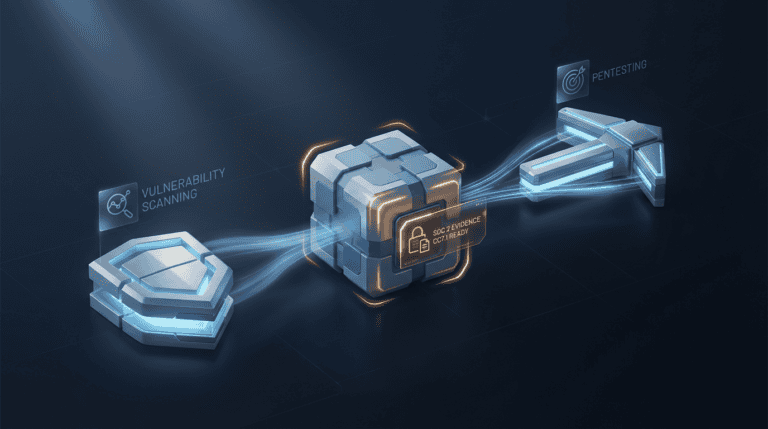
A configuration review uses automated tools to compare systems against known benchmarks. It helps identify basic issues but does not simulate real attacks. A penetration test goes further. It actively exploits vulnerabilities to demonstrate real-world impact.
The Assumed Breach Approach
For complex multi-cloud architectures, the Assumed Breach methodology is a highly effective approach. This model starts with the premise that an attacker has already established an initial foothold, for example, by compromising a developer’s credentials or a web application. The test then focuses on post-exploitation activities: can the attacker move laterally, escalate privileges, and access sensitive data? This approach is ideal for testing defense-in-depth controls across provider boundaries.
A robust multi-cloud pentesting methodology must be holistic. It should adapt foundational frameworks like the NIST SP 800-115 and OWASP guidelines to the unique nuances of interconnected cloud services. The goal is not just to find individual misconfigurations but to chain them together into a realistic attack path. For organizations starting their cloud security journey, foundational knowledge is key, and resources like an AWS penetration testing guide or an Azure penetration testing overview provide the necessary groundwork before tackling multi-cloud complexity.
Common Attack Vectors at the Seams of AWS, Azure, and GCP
Attackers thrive on complexity and inconsistency. In a multi-cloud environment, the most critical vulnerabilities often appear at the integration points between platforms. A skilled penetration tester will focus on these seams to uncover high-impact attack paths.
Cross-Cloud IAM Privilege Escalation.
A common scenario involves exploiting trust relationships between cloud accounts. For instance, an attacker compromises a GCP service account with overly permissive roles. They discover this account is trusted by an AWS IAM role to access specific resources. By using the GCP credentials, the attacker can assume the AWS role and pivot their attack into the AWS environment, potentially gaining access to sensitive S3 buckets or RDS databases. Securing these cross-cloud identities is a significant challenge, as highlighted by the Cloud Security Alliance.
Lateral Movement via Misconfigured Network Peering.
Organizations often connect virtual networks across clouds, such as an AWS VPC and an Azure VNet, to allow applications to communicate. If the network security groups or firewall rules governing this connection are too permissive, it creates a pathway for lateral movement. An attacker who compromises a virtual machine in the Azure VNet could scan and attack resources in the supposedly isolated AWS VPC, bypassing perimeter defenses.
Exploiting Inconsistent API Security Standards.
An application may be architected across multiple clouds, with a front-end hosted in GCP and a back-end data processing service in AWS. If the API gateway in GCP has weaker authentication or rate-limiting standards than the services it connects to in AWS, an attacker could exploit this inconsistency. They might leverage the weak API to submit malicious requests, exfiltrate data, or cause a denial-of-service condition that affects the entire application stack.
CI/CD Pipeline Compromise.
The CI/CD pipeline is a powerful and high-value target for attackers. As noted by security experts in a discussion on cloud pentesting, a common entry point is phishing a developer to gain access to their source code and CI/CD pipeline. Since these pipelines often hold credentials to deploy resources across AWS, Azure, and GCP, a single compromise can lead to a widespread breach across the entire multi-cloud infrastructure. An attacker could inject malicious code, steal secrets, or deploy backdoored resources.
Scoping a Multi-Cloud Pentest: A Practical Checklist
Properly scoping a multi-cloud penetration test is critical for a successful engagement. A poorly defined scope can lead to missed vulnerabilities or wasted effort. Organizations should work closely with their testing partner to create a comprehensive plan.
Define Clear Objectives.
What is the primary goal of the test? Is it to achieve compliance with a standard like SOC 2 or ISO 27001? Is it to assess the security of a specific application deployed across multiple clouds? Or is it to simulate a sophisticated adversary targeting the organization’s crown jewels? The objectives will dictate the methodology and depth of the test.
Map the Entire Environment.
Document all cloud providers in use, including the number of accounts, subscriptions, and projects. Identify the key services being used and, most importantly, map the data flows and trust relationships between them. This map is the blueprint for the penetration test.
Understand the Rules of Engagement.
Each cloud provider has specific policies that govern penetration testing. For example, AWS, Microsoft Azure, and Google Cloud have published rules of engagement that outline permitted and prohibited activities. Both the testing team and the client must understand and adhere to these rules to ensure the test is conducted legally and without causing unintended service disruptions.
Allocate Sufficient Time.
A complex, interconnected multi-cloud environment cannot be thoroughly tested in a few days. As experts emphasize, a one-day test of a complex environment is little more than a configuration review. The scope must account for the number of services, the complexity of the architecture, and the depth of testing required. Rushing the process will only provide a superficial assessment.
Provide Access to Infrastructure as Code (IaC).
Whenever possible, provide the penetration testing team with read-only access to IaC templates from tools like Terraform or CloudFormation. This allows testers to quickly understand the intended architecture and identify where the deployed environment has drifted from its baseline, making the discovery of vulnerabilities far more efficient.
Why Manual Expertise is Non-Negotiable for Multi-Cloud Security
In the face of multi-cloud complexity, many organizations turn to automated security tools. While solutions for Cloud Security Posture Management (CSPM) and Cloud Workload Protection (CWPP) are valuable for identifying known misconfigurations and enforcing compliance baselines, they have significant limitations. As analyses from sources like an article on multi-cloud security tools show, these tools are excellent at scanning for issues within a single platform but often fail to identify the logical flaws and chained exploits that cross provider boundaries. They lack the context to understand how a low-risk vulnerability in GCP could be combined with a misconfiguration in Azure to create a critical attack path.
This is where manual expertise becomes non-negotiable. A certified penetration tester brings the creativity, intuition, and adversarial mindset that no automated scanner can replicate. They think in terms of attack paths, not just individual vulnerabilities. It takes a human expert to connect the dots between seemingly unrelated issues across AWS, Azure, and GCP to uncover the sophisticated, high-impact threats that could lead to a major breach. As one expert puts it, you can tell the difference between a general pentester and a cloud security specialist who truly understands these environments.
Conclusion
At CYBRI, our manual-first Penetration Testing as a Service (PTaaS) is designed for this exact challenge. Our U.S.-based Red Team specializes in deep, rigorous assessments of complex multi-cloud environments. We go beyond automated scans to simulate real-world adversaries, identifying the chained exploits that put your business at risk. We provide a clear, compliance-ready report with actionable remediation guidance tailored to your specific architecture, whether it’s on AWS, Azure, or GCP.
To truly secure your multi-cloud infrastructure, you need a partner who can find and fix the vulnerabilities that automated tools miss. To see how our experts can help you navigate the complexities of multi-cloud security, Request A Demo.