Organizations operating in regulated fields must demonstrate both protective measures and compliance with legal and industry frameworks through their cybersecurity practices. Penetration testing helps comply with these requirements through auditor-friendly documentation and formal reports. Furthermore, compliance-aligned pentesting delivers business value beyond satisfying a checkbox, providing assurance to enterprise clients, partners, and auditors that these defenses have been vetted by professionals using real-world attack techniques.
Who can help with this specialized process? Below we profile some of the best consulting companies known for providing penetration testing services aligned with compliance and regulatory needs.
List of Companies:
- Cybri
- Coalfire
- Synack
- NetSPI
- Praetorian
- Rapid7
- Bishop Fox
- A-LIGN
- Cobalt
1. Cybri
Best for: Organizations looking for fast-turnaround pentests tailored to SOC 2, ISO 27001, GDPR, HIPAA, FINRA, DORA and startup compliance needs, with a heavy focus on manual testing for remediation and support.
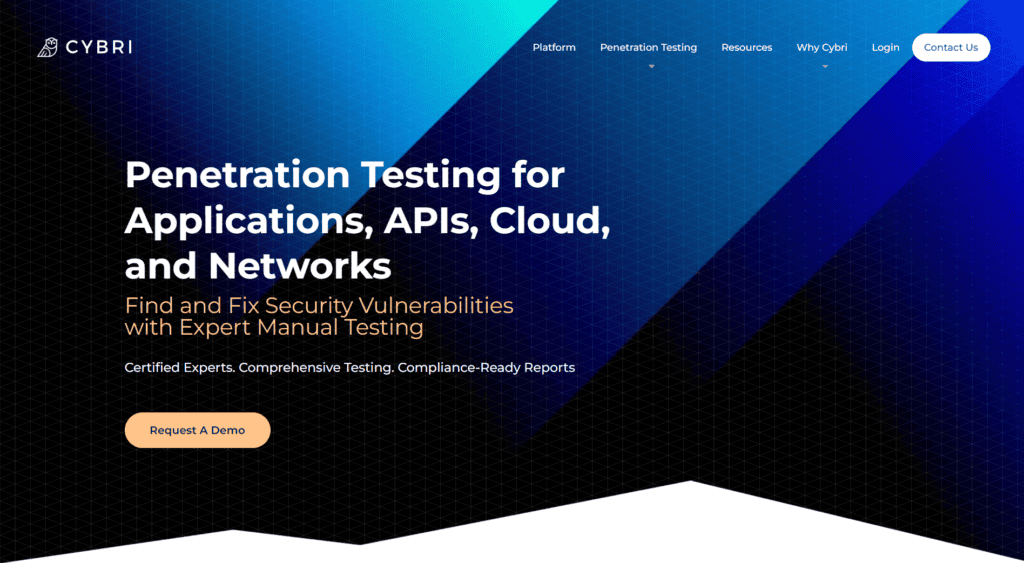
Cybri is a web app penetration testing company that delivers high-impact penetration testing, focusing on meeting compliance requirements such as SOC 2, ISO 27001, GDPR, HIPAA, FINRA, DORA, NYDFS 23, NYCRR 500 and more. They also offering more advanced security services for growing organizations.
Their approach is technically-oriented with a focus on manual testing and streamlined tools to achieve efficient results in a short period of time. Cybri also employs a highly skilled Red Team, composed of US-based former US military veterans and former Fortune 500 employees. Their team is CREST accredited, highlighting their intensive knowledge of operating systems and network services.
Cybri conducts rapid tests for web apps, mobile apps, network and infrastructure systems and even cloud services. They also help startups and SaaS providers satisfy demanding security questionnaires from enterprise customers through their PTaaS solution, Blue Box, thanks to real-time insights and reports of findings with Jira ticketing features.
Cybri’s senior team has experience across SaaS, fintech, and healthtech industries [1], and are familiar with AWS, Azure, and GCP cloud stacks. Their engagements typically include a dedicated team of certified professionals and built-in retesting support to verify remediation and more. As such, Cybri can deliver rapid yet thorough assessments without sacrificing the detailed documentation auditors expect.
Website: https://cybri.com
2. Coalfire
Best for: Government cloud (FedRAMP) and payment industry (PCI DSS) penetration testing

Coalfire is an established name in the compliance-oriented cybersecurity services industry, known for their work in federal and cloud security. The firm combines audit expertise with hands-on technical testing to focus on regulatory standard validation and deliver dedicated test types for both FedRAMP and PCI compliance.
Coalfire’s testing is structured around compliance frameworks restricting flexibility for organizations that need less prescriptive engagements. Their service portfolio extends from finance and healthcare to tech sectors but their emphasis remains primarily on compliance testing with red teaming and IoT testing as secondary offerings.
Coalfire stands as a suitable choice for organizations requiring a pentest partner who serves both testing roles and regulatory consulting work. Hence, those prioritizing agility or adversarial simulations over strict control mappings may find that other providers offer a better balance.
Website: https://coalfire.com
3. Synack
Best for: Continuous, on-demand pentesting with built-in compliance reporting.

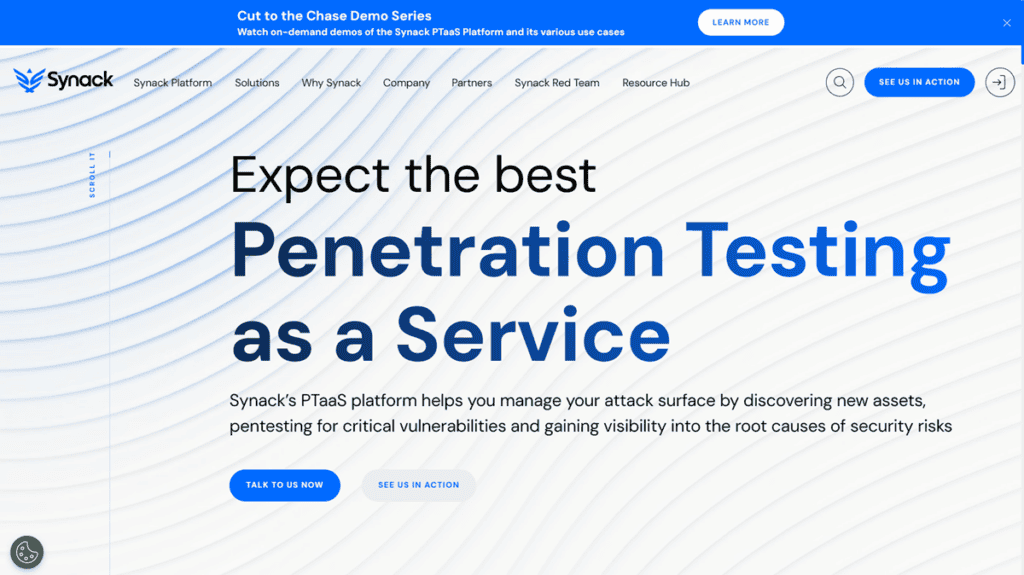
Synack presents a fresh approach to penetration testing through its crowdsourced platform which helps organizations achieve compliance requirements at scale by utilizing its qualified “Red Team” [2] researchers to produce audit-ready results quickly.
The platform operates at a high speed, automatically testing OWASP Top 10 and NIST 800-53 while creating reports within 24 hours. It supports SOC 2 and PCI and FedRAMP standards, and the blend of human testers with automated tracking helps organizations quickly document fixes and map findings to controls.
Synack also provides flexible testing durations which range from two-week periods to ongoing assessments to assist projects with quick turnaround requirements. The platform operates with a system that focuses on completing tasks efficiently at times instead of deeper analysis. This approach works well for standard compliance but organizations looking for personalized adversary testing or specialized tests will discover limited flexibility compared to conventional pentesting providers.
Website: https://synack.com
4. NetSPI
Best for: Large enterprises needing scalable pentesting aligned to multiple frameworks.
NetSPI delivers penetration testing services to large organizations through both individual test services and continuous security operations. Their testing methodology combines strict technical standards with regulatory framework knowledge to achieve alignment with NIST SP 800-53 and OWASP Top 10 as well as PCI HIPAA and SOC 2 standards.
Reports include audit-friendly evidence and remediation guidance, which helps regulated organizations close findings efficiently. Their PTaaS model (via the Resolve™ platform) adds value for long-term compliance, letting clients track vulnerabilities and retest over time, which can be useful for frameworks like ISO 27001.
NetSPI primarily delivers enterprise-oriented services that exceed the requirements of smaller teams and single testing needs. The typical enterprise reliance on NetSPI stands strong, yet their testing framework might be too advanced for organizations seeking basic tests.
Website: https://www.netspi.com
5. Praetorian
Best for: Deep technical expertise for high-security environments (with compliance as a byproduct).

Praetorian functions as an offensive security organization which addresses complex technical evaluations including IoT device hacking alongside cloud-native application penetration tests. Despite not being compliance auditors, their team possesses complete understanding of regulation requirements which they demonstrate through their work with defense organizations, financial institutions, and technology companies requiring advanced security testing.
Praetorian’s consultants include GRC specialists who can advise on how to prioritize fixes in light of regulatory obligations. This focus on technical depth means they may not be the fastest or cheapest option for straightforward compliance checkbox exercises, as their value shines most when organizations need to exceed baseline requirements. However, they will help ensure you are not just “compliant” but truly resilient against real-world attackers, which is the ultimate goal.
Website: https://www.praetorian.com
6. Rapid7
Best for: Organizations looking for automated solutions, with less focus on manual testing in terms of end-to-end compliance coverage
Rapid7 is a well-known cybersecurity company offering both technology products and consulting services. Their penetration testing team is experienced in helping organizations fulfill their compliance mandates across many standards and their reports balance technical detail with executive summaries, simplifying communication with auditors. Beyond standard tests, Rapid7 offers cloud assessments and social engineering tests that can support broader compliance needs.
If your organization is already using Rapid7 products or you want a provider that can do security testing at scale, their consulting arm is a solid pick. In some cases, however, their enterprise-scale approach may feel overly process-driven for smaller organizations or startups.
Website: https://www.rapid7.com
7. Bishop Fox
Best for: Organisations looking for offensive security and “beyond compliance” insights for mature programs
Bishop Fox is a respected offensive security consultancy known for high-impact testing, zero-day research, and compliance-aligned engagements. They have developed the so-called Cosmos platform, which enables real-time findings tracking, and supports continuous testing for organizations treating compliance as a starting point. Bishop Fox is also CREST-accredited, which is a plus if you need a pentest for international compliance.
They do offer some compliance-aligned services, as they have packages for PCI DSS pentesting and red-teaming for GDPR/DORA regulations, which can be interesting for organizations looking for a thorough examination of their security measures. Their findings are produced with a report that aims to satisfy auditors, while providing your technical team with a roadmap to fix the most critical issues.
However, their deep technical focus comes with tradeoffs, as Bishop Fox’s engagements often require more time and budget than basic compliance tests, making them better suited for mature security programs and not particularly suited for startups or smaller organizations.
Website: https://bishopfox.com
8. A-LIGN
Best for: Mid-sized companies seeking a combined compliance auditor and pentesting provider.

A-LIGN is a cybersecurity and compliance firm that has made a name for itself by working with a number of companies following standards like SOC 2, ISO 27001, HITRUST and FedRAMP. They also maintain a dedicated penetration testing team, often helping cloud software companies prepare for SOC 2 audits.
As part of the process, they conduct a thorough pentest of the product and infrastructure to satisfy the auditors, as their findings reports explicitly call out which security criteria or controls are impacted. They are also a PCI QSA and can perform the required annual PCI pentests for merchants or service providers.
A-LIGN’s standardized approach works best for common frameworks, as highly customized environments might require additional tailoring. While thorough for audit requirements, organizations seeking advanced offensive security may need to supplement with specialized firms.
Website: https://a-lign.com
9. Cobalt
Best for: Agile teams needing Pentest-as-a-Service (PTaaS) with compliance-ready deliverables.
Cobalt is a leading PTaaS platform connecting businesses with a vetted community of penetration testers through an intuitive cloud platform. The platform delivers rapid collaboration and allows users to discover findings immediately and start resolving issues without needing to wait for a complete report. This continuous communication model fits well with DevOps-focused SOC 2 and ISO 27001 frameworks, as they prioritize ongoing improvements. However, it might lack the consistency of a dedicated team for organizations wishing to maintain long-term tester relationships.
Organizations that seek modern platform-based security testing with minimal consultant overhead should consider Cobalt since it delivers quality results that meet both client and regulatory requirements.
Website: https://cobalt.io
Why Compliance Requires More Than Just a Pentest
Compliance standards require more than performing a single penetration assessment before storing the report. With research finding that 96% of organizations [3] cite high-profile breaches and compliance fines as key drivers for GRC prioritization, this rigorous approach has become essential for both security and business continuity.
Organizations need to document and repeat penetration tests while maintaining audit trails because modern compliance standards require evidence of systematic risk identification and remediation processes. As one of the leading blogs on cybersecurity notes, “A good pentest can tell you about the technical deficiencies that make you vulnerable. A bad pentest can lie to you and make you believe you’re more secure than you really are.” [4]
Finally, third-party validation plays a big role in compliance, as it is one thing to claim your systems are secure, but it is far more credible when an unbiased expert confirms it in a report. The standards including FedRAMP require penetration test outcomes from authorized third-party evaluators while most enterprise purchasing departments require current penetration test assessments for finalizing agreements.
Common Compliance & Regulatory Standards That Involve Penetration Testing
To better understand how various standards treat penetration testing, the table below summarizes key frameworks and whether they explicitly require pentests.
Compliance / Regulation | Industry | Is Penetration Testing Required? | Purpose of Pentest in Compliance | Best Practices |
SOC 2 | SaaS, Cloud | It is a de facto requirement | Supports Security trust criteria | Annual or biannual tests with evidence for auditors |
HIPAA | Healthcare | Not required, but part of risk management | Protects ePHI, demonstrate safeguards | Annual testing + continuous vulnerability assessments |
PCI DSS | FinTech, eCom | Required [5] (Req. 11.4) | Identifies exploitable vulnerabilities | Internal + external pentests after significant changes |
ISO 27001 | All sectors | Not required, but strongly aligned | Supports Annex A controls (A.12, etc.) | Align testing with ISMS risk treatments |
GDPR | Global | Not required, but supports Article 32 | Shows “appropriate” technical measures | Include in Data Protection Impact Assessments |
FedRAMP | SaaS (Gov) | Required | Required for ATO under FedRAMP | Conducted by certified 3PAOs |
CMMC | Defense | Required for Level 3+ | Assures security of CUI (Controlled Unclassified Info) | Red teaming and continuous assessment |
NIST 800-53/171 | Federal/Defense | Not required, but strongly recommended | Supports SA-11 and RA family controls | Regular testing mapped to NIST controls |
GLBA / FFIEC | Banking/Finance | Indirectly required | Ensures ongoing info security program | Part of broader CAT assessments |
How Compliance-Focused Pentest Providers Help
Specialized penetration testing vendors bring more to the table than just technical skill, as they tailor their approach to meet compliance objectives, helping define the test scope around your regulated systems and data. The reporting from compliance-focused pentests is also often formatted for audit and executive consumption with detailed findings and risk ratings.
Vendors focused on compliance keep up with the nuances of each regime, knowing the difference between testing for a SOC 2 vs. a FedRAMP assessment, for instance. This expertise means they won’t miss requirements such as PCI’s mandate to test segmentation, and can advise you on how to address any gaps.
Finally, retesting and support is an important factor to consider, as compliance isn’t one-and-done, which is why the best pentest firms offer retesting to verify that vulnerabilities are fixed before your audit deadline. Many also provide consultative support to answer auditor questions about the test results, or to tweak testing procedures if your compliance scope changes.
What to Look for in a Compliance-Focused Pentest Partner
Choosing the right penetration testing vendor is crucial, especially when compliance is on the line. One obvious thing to look for are firms that have direct experience in your industry and with the specific frameworks you need such as SOC2 for SaaS. Building on this, the team should also possess respected certifications and accreditations. Common ones include technical certs like OSCP, CREST, CISSP, CEH, or compliance-specific ones like PCI QSA or FedRAMP 3PAO.
In addition, consider asking about their methodology and reporting format. Do they follow recognized standards? Will the report include an executive summary and evidence that can be given to auditors? A quality provider will have a clear testing process and deliverable structure that aligns with compliance needs.
Beyond the penetration test itself, effective remediation and collaboration are critical. As noted in the independent Blog on Security, “Reporting is key to keep the business updated on pentest remediation efforts,” [6] particularly when integrating findings into existing workflows like Jira. So, ask vendors if they offer free retesting within your audit window, or whether they can push vulnerabilities into ticketing systems such as Jira. These capabilities often determine whether critical fixes get implemented before deadlines.
Conclusion
In an era of ever-tightening cybersecurity regulations and standards, it is no longer sufficient to treat penetration testing as a casual, optional exercise. For companies pursuing certifications or serving clients in regulated industries, a solid penetration testing program is foundational and underpins your attestations that the controls have been independently verified.
Ultimately, the right compliance-focused pentest partner will help you strengthen security and trust simultaneously, ensuring you not only check the required boxes, but also uncovering hidden risks and guiding you to fix them.
For any organization unsure where to start, consider reaching out to a qualified provider like Cybri today, as their expertise in compliance-aligned penetration testing can make the difference between a stressful audit and a smooth, successful one.
References
- Cybri. (n.d.). About Us
- Synack. (n.d.). The Synack Red Team
- Cyber Security Intelligence. (2025). Turning Compliance Into Competitive Advantage
- Between Two Firewalls. (2024). Getting the Best Value From Penetration Testing
- PCI DSS Guide. (2020). PCI DSS Requirement 11 Explained
- Blog on Security. (2023). How to process pentest findings with Jira and Confluence